What older gay men entering aged care are concerned about
Ostracisation is the main concern for older gay men considering entering into aged care settings, as well as class and sexuality according to new research from Swinburne University of Technology.

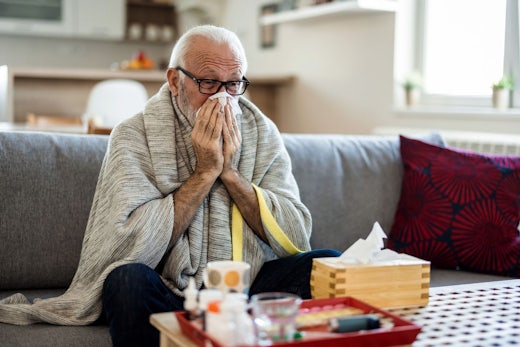
Older gay men have concerns about entering into aged care (Source: Shutterstock)
“The fear of homophobia is not necessarily from the staff, the greater fear can be from other residents and their families,” Swinburne Senior lecturer in sociology and history Dr Peter Robinson says.
The 25 participants in the study were aged 60 and older, and were from Auckland, London, Manchester, Melbourne and New York. They spoke of their concerns regarding care workers and the possible effect of the heterosexist culture, in which opposite-sex relationships are seen as the norm. Some men expected to find homophobic residents, care workers or management in aged-care facilities.
Dr Robinson says for the generation of men facing the prospect of aged-care living after embracing their sexuality in a time of oppression, there’s both resilience and vulnerability because of the era of when these men came out.
He also notes while anti-discrimination legislation is in place and has an important role, he would like to see training continue for staff at all levels in diversity appreciation and knowledge.
Over the past few years, an increasing number of service providers have implemented inclusive policies and strategies for lesbian, gay, bisexual, transgender and intersex (LGBTI) people, and included specialist staff training in this area. Many providers across Australia have now achieved The Rainbow Tick accreditation, which consists of six national standards designed to demonstrate LGBTI inclusive practice and service delivery.
However, Dr Robinson feels the training is more at the higher socio-economic end, and he would like to see staff training more in aged care facilities at all levels. “I think this is happening, especially in suburbs of capital cities in Australia where there are active gay and lesbian elder community networks,” he says.
He also highlights HIV was seen as the most pressing issue in the gay community for a long time. “Now it seems there is more space to talk about other health issues for gays and lesbians,” he says.
The study found other fears shared by older gay men were similar to their heterosexual counterparts, including more universal concerns regarding supported care, aged accommodation and social isolation. Like heterosexual people, class was also found to affect gay men’s experience and expectations of old age.











![The new Aged Care Act exposure draft is slated for release in December of 2023, but advocates hope to see it rolled out on January 1, 2024. [Source: Shutterstock]](https://agedcareguide-assets.imgix.net/news/articles/wp/agedcareact__0811.jpg?fm=pjpg&w=520&format=auto&q=65)










Comments