

How staff and families differ on CCTV in aged care facilities
New findings reignite the debate about surveillance in Australian aged care facilities
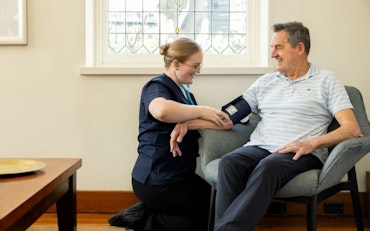
![<p>How do you feel about the use of closed caption television, better known as ‘CCTV,’ in aged care facilities? [Source: Shutterstock]</p>](https://agedcareguide-assets.imgix.net/news/articles/wp/CCTV__0404.jpg?fm=pjpg&format=auto&w=550&q=65)
How do you feel about the use of closed caption television, better known as ‘CCTV,’ in aged care facilities? [Source: Shutterstock]
Key points:
- Australia’s first trial of CCTV cameras in aged care rooms began in South Australia in 2021
- Cameras are generally installed in the common areas of aged care homes, most notably in dining rooms, foyers and other public areas
- Residents and staff have a right to privacy, safety, dignity and quality of care in aged care homes
New research has revealed that more family members were in favour of CCTV in both public and private areas, compared to staff who favoured public areas, in Australian aged care homes.
The study, published in the Australasian Journal on Ageing, surveyed 81 staff and 74 family members. Both staff and family were satisfied with care quality and safety, irrespective of CCTV use.
Staff reported that they were more satisfied with both the care quality and safety of residents than family, who were more satisfied with the quality but less satisfied with the safety.
Family members felt that cameras in public areas were beneficial to prevent falls, abuse and to uphold the safety of residents and staff, with those who supported room monitoring applying the same reasoning to justify their opinion.
Fourteen percent of staff members felt that CCTV in public spaces made them feel ‘watched or judged,’ although some family and staff members identified that the technology also disadvantaged residents and violated their privacy.
Among the family members surveyed, 85 percent stated they had not installed a camera in their resident’s room; however, 38 percent had considered it. Respondents were largely unaware of cameras in public areas outside of entry and exit doors.
Researchers found the belief that CCTV surveillance is only required where people believe there may be poor-quality care was not supported by their results, as there was a clear preference for its use from both staff and families.
The authors ‘[…] hope this article inspires debate and justifies further evidence-based research that leads to real action, helping [residential aged care facilities] make better use of technology to support staff, optimising resident well-being and giving their families peace of mind that their loved ones are receiving safe, quality care at all times.’
In the Technology in Aged Care Consultation Report, following a 12-month trial of private and common CCTV room monitoring conducted by SA Health in two facilities, feedback from the public was reported to be ‘strongly in favour of legislation being developed to support and guide the ethical use of surveillance technology.’
Over half of those who voiced their opinion on the surveillance debate found that wearable technology was a preferable alternative to CCTV, as a means of ensuring safety and fall monitoring without impeding on the privacy of residents and staff.
How do you feel about the use of surveillance in aged care facilities? Do you think that wearable technology is a better idea to maintain safety? Let the team at Talking Aged Care know and subscribe to the newsletter for more news, information and industry updates.
Related content:
Why Easter matters more in aged care homes