Study points to potential for grandparents to prevent ageism
Spending quality time with grandparents could play a key role in reducing ageist attitudes in younger people according to the findings of a recent study conducted by Belgian researchers.
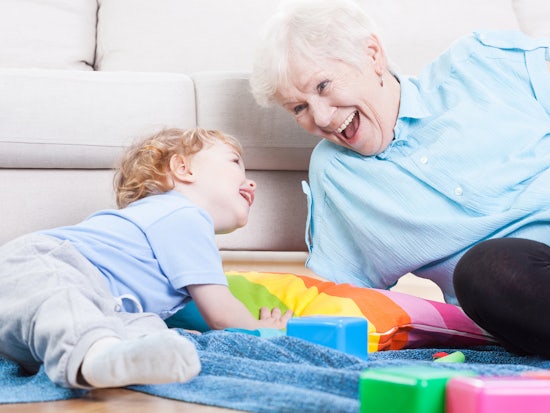
New study shows that interactions between grandparents and grandchildren could prevent ageism (Source: Shutterstock)
The study, Impact of Contact with Grandparents on Children’s and Adolescents’ Views on the Elderly, by the University of Liège in Belgium worked with 1,151 children and adolescents aged 7-16 to identify underlying factors that allow ageism to be detected in children as young as three.
Through questionnaires, researchers asked youths their thoughts on getting old and about the elderly, while also collecting information about the health of their grandparents, how often the two generations met, and how they felt about their relationship with their grandparents.
Leader of the research team and psychology PhD student at the University of Liège, Allison Flamion, says the study found that ageist stereotypes in children and adolescents generally decrease around ages 10-12, and that young people who say they have very good contact with their grandparents have the lowest levels of ageism.
“The most important factor associated with ageist stereotypes was poor quality of contact with grandparents,” Ms Flamion explains.
“We asked children to describe how they felt about seeing their grandparents – those who felt unhappy were designated as having poor quality contact.
“When it came to ageist views, we found that quality of contact mattered much more than frequency.”
The study also revealed that ageist stereotypes fluctuated with age, highlighting that those aged between 7 and 9 expressed the more prejudice, those aged 10-12 expressing the least, and those in their teen years, aged 13-16 reporting to have high levels of of ageism – results that the research team say “mirrors other forms of discrimination” and is “in line” with cognitive-developmental theories.
The health of grandparents was also reported as a contributing factor in youth views on ageism, with those who had grandparents in poor health more likely to hold ageist views, than those with grandparents in good health.
But, despite all the key findings from the research, study co-author and Professor of Psychology at the University of Liège, Stèphane Adam, says the most important factor influencing youth views of the elderly was the quality of contact with their grandparents.
“For many children, grandparents are their first and most frequent contact with older adults,” Professor Adam explains.
“Our findings point to the potential of grandparents to be part of intergenerational programs designed to prevent ageism.
“Next, we hope to explore what makes contacts with grandparents more rewarding for their grandchildren as well as the effects of children living with or caring for their grandparents.”
Australian Minister for Aged Care Ken Wyatt says addressing ageism in Australia is something that needs more work.
“There is no doubt we need to work hard to counter ageism and change the mindset of many people towards senior Australians,” Minister Wyatt says.
“This is particularly concerning in the job market where we hear many stories of older people struggling to find employment.
“Promoting respect for senior Australians is fundamental for a cohesive and inclusive future, especially as the proportion of seniors grows rapidly.”
Minister for Social Services Dan Tehan says the Government encourages positive interactions between people of different ages because of the many benefits for the individuals involved and the community.
“The Australian Government operates the Be Connected program to increase the digital literacy confidence, skills and online safety of older Australians,” he says.
“The Government is also providing around $45 million for the Strong and Resilient Communities grants program to build social cohesion and address community needs,”
Minister Wyatt “commends” the many local programs operating across the nation to bring children and teenagers together with seniors for meaningful interaction.
“There are some excellent examples, ranging from parents bringing their youngsters into residential aged care facilities, to high school students writing the biographies of senior Australians,” he says.
“We must value seniors for what they have done and continue to do so, as grandparents, mentors, volunteers and givers of knowledge and experience.”
Minister Wyatt adds that as a country, a healthy attitude towards senior Australians is a “mark of a healthy community”.











![The new Aged Care Act exposure draft is slated for release in December of 2023, but advocates hope to see it rolled out on January 1, 2024. [Source: Shutterstock]](https://agedcareguide-assets.imgix.net/news/articles/wp/agedcareact__0811.jpg?fm=pjpg&w=520&format=auto&q=65)









Comments