ROYAL COMMISSION: Government not taking action
The first day of the aged care workforce focus for the Royal Commission into Aged Care Quality and Safety started with sad news about the passing of Commissioner Richard Tracey.
![<p>The Royal Commissioners, Tony Pagone QC and Lynelle Briggs AO, and the court stood for a minute of silence in honour of Commissioner Richard Tracey. [Source: Aged Care Royal Commission]</p>](https://agedcareguide-assets.imgix.net/news/articles/news/articles/Screen-Shot-2019-10-16-at-11.57.00-am.png?fm=png&format=auto&w=550&q=65)
The Royal Commissioners, Tony Pagone QC and Lynelle Briggs AO, and the court stood for a minute of silence in honour of Commissioner Richard Tracey. [Source: Aged Care Royal Commission]
There was a moment of silence in Commissioner Tracey’s honour before they continued on with the day’s proceedings.
The Commission heard from Professor John Pollaers OAM, Chair of the Aged Care Workforce Strategy Taskforce, who was brought onto the taskforce by the Government in 2017 with the purpose of dealing with current issues affecting the aged care workforce.
At the end of the process, the report was delivered to the Government. Professor Pollaers is deeply concerned that he received no response at all about the recommendations related to Government action.
The very first recommendation involved collaboration between both the Government and aged care sector to make social change around the perception of the aged care workforce.
“I think they’re important because Strategic Action 1 is a co-commitment… between industry and Government. It’s one that needs to be done together but essentially what we were focusing on is in – the philosophy of the taskforce was let’s see how far industry can go on its own, and then what’s left is the work of Government,” says Professor Pollaers.
“… But on these areas we haven’t had a sufficient – or a response at all from Government.
“I made the observation at the very beginning of [my] evidence today that I felt that in many ways the industry is undergoing a level of oppression, maybe not the right word, but I do believe that this is not a Department that is resourced well enough, that has sufficient experience and/or weight within the current Government department that it sits.”
Professor Pollaers says he was surprised by how much the “Prime Minister and Cabinet were sitting on top of the Minister with respect to these issues” over the taskforce’s research.
He went on to explain that his aim for the report was to make sure every area was going to be implemented, but nothing seems to be done in regards to the five points that were specifically for the Government to fix.
These recommendations included, a social change campaign, strengthening the interface between aged care and primary and acute care, improvement of training and recruitment practices for the Australian Government’s own aged care workforce, establishing an Aged Care Centre for Growth and Translation Research, and current and future funding plans.
Professor Pollaers says he was disappointed that the Research Centre recommendation was used as a pre-election commitment but he has not seen any progress at all.
Staffing inadequacy an ongoing problem in aged care
Day 2 of the Royal Commission into Aged Care Quality and Safety spent the day investigating a case study involving aged care provider, Menarock Life, and the alleged understaffing at their Greenway Gardens facility in Melbourne.
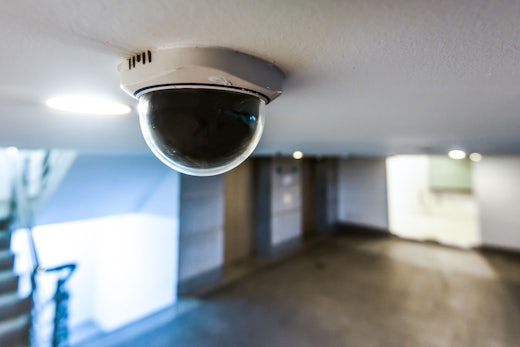
Sisters, Sandra Nisi and Christine Lynch described the horrible physical and verbal abuse their father, Mr UG, experienced while at the facility, which they only found after placing a hidden camera in his room.
Both daughters believe the facility was severely understaffed, which resulted in poor care provided to their father, including rough handling, verbal abuse, gout growth on his toes, dentures not put in before eating, and chunks out of his cheek from poor shaving by staff.
Ms Nisi says her father couldn’t do anything after two months within the dementia ward, resulting in Mr UG being fully reliant on staff for all of his needs.
When Mr UG reached a palliative care stage and was close to death, the facility never explained to the family what palliative care was, so they were not aware he was dying.
The family never received a call through the night about him deteriorating or when he had died; they only received a call the next day in the morning saying he had passed.
To this day, the family have no idea whether Mr UG passed away on the 27 or 28 of November, 2018; the facility also has no idea when he died.
Ms Lynch says upper management at Greenway Gardens was reluctant to do anything about the footage of verbal and physical abuse.
She felt that the former Chief Group Operations Manager of Greenway Gardens was more concerned about the camera in Mr UG’s room than the actual footage.
Fighting for more staff
Former Director of Nursing at Greenway Gardens, Yvonne Henderson, described the staffing levels as “totally inadequate.”
Ms Henderson explained her ongoing fight to get adequate staffing levels at the facility, including the problems with unfilled vacant positions and a company restructure that wouldn’t allow her to recruit any permanent staff.
Ms Henderson says the video footage of Mr UG’s treatment by staff brought her to tears.
“I was very upset, and distressed. In fact, when UF (one of Mr UG’s daughter) showed me, gave me the USB stick to read, I just cried. I couldn’t believe that that was going on in the facility, and in the facility that I was managing,” says Ms Henderson.
“I was told [by upper management], “We do nothing. Head office will handle it. We can’t report it because these people have been filmed without their knowledge and without their permission and the family didn’t have permission to put the camera into the room and nor did they advise us or request to do so.”
Former Chief Group Operations Manager of Greenway Gardens, Brendan Coulton, fronted the Commission, admitting that there were issues with staffing levels and the type of staffing they had in the facility.
He accepted that Ms Henderson had been asking for more staff for the facility for months.
Mr Coulton blamed staff attitude saying he wanted to fix the casual staff culture and the lacking continuity of care first.
The footage of Mr UG’s lived experiences at Greenway Garden was “confronting” to Mr Coulton.
He says the facility had never dealt with a family before in regards to camera footage and agreed it was fair comment from the family that he didn’t seem to be concerned with the actual act but by the footage being in existence.
“I didn’t certainly mean that to be the message that came back. I did, in my very first sentence back to the family in correspondence, say sorry and also acknowledged what grief they were going through,” says Mr Coulton.
“The concerns that I did have were around the privacy laws and how that might play out around confidentiality and how we could use the video. There were industrial relations issues to think about.”
Counsel Assisting asked as to why Menarock produced no documentation after being served a number of notices by the Commission to provide documents.
Mr Coulton put it down to time and the volume of information, but also saying he didn’t have an explanation for not producing the documents.
The Royal Commission hearings are running from October 14-18, focussing on the aged care workforce.










![The new Aged Care Act exposure draft is slated for release in December of 2023, but advocates hope to see it rolled out on January 1, 2024. [Source: Shutterstock]](https://agedcareguide-assets.imgix.net/news/articles/wp/agedcareact__0811.jpg?fm=pjpg&w=520&format=auto&q=65)








Comments