Research results mark possible delay to Alzheimer’s
A new way to monitor, predict and delay the onset of Alzheimer’s disease could be on the cards thanks to new results released from joint research between ‘The Florey’ and CSIRO.

Joint research on alzheimer’s disease released
Six years of research collaboration between Dr Scott Ayton and Professor Ashley Bush from the Florey Institute of Neuroscience and Mental Health and Corporate Research Centre (CRC) for Mental Health has now shown an association between higher levels of brain iron, the presence of known Alzheimer’s protein called amyloid, and poorer memory and language skills.
Using data gathered from 117 participants in the Australian Imaging Biomarker Lifestyle (AIBL) study every 18 months, the researchers looked into whether brain iron and amyloid can predict people’s cognitive decline.
“Cognitive abilities like short-term memory, executive function and language ability declined much faster in people with high brain iron levels and high amyloid levels, even if they were otherwise healthy, than those with low brain iron who were also amyloid positive,” The Florey’s Dr Ayton says.
While the study used correlations between iron, amyloid and cognitive performance, iron cannot yet be called a ‘causative’ agent in Alzheimer’s disease; researchers say it makes ‘compelling biological sense’.
“These results suggest that iron acts together with amyloid to speed up the Alzheimer’s disease process,” Dr Ayton says.
“Those individuals with high amyloid but low iron will also eventually go on to develop Alzheimer’s disease, but much later than their high-iron counterparts.”
Researchers, including CSIRO researcher Dr Olivier Salvado say the discovery was made possible using technology developed by CSIRO and conducted in a collaborative study funded by the CRC for Mental Health.
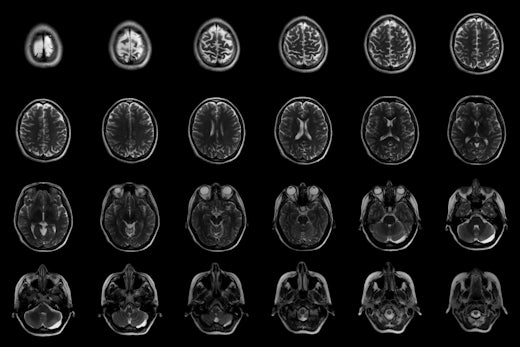
“We’ve refined MRI technology to allow the very precise mapping of iron levels in the brain,” Dr Salvado says.
“Collaborating with world-leading scientists at the Florey Institute was critical to drive our innovation into potential clinical use.”
Now in the next stage of the research, and to test the theory of association between higher levels of brain iron and amyloid, ‘The Florey’ scientists Dr Ayton and Dr Bush plan to use an existing drug, deferiprone, to ‘mop up’ excess iron in the brain and see if it can slow down the progression of Alzheimer’s disease.
“The 3D trial is extremely exciting because for the first time we will be able to assess someone’s risk of progressing into cognitive decline without needing to perform invasive and costly tests,” Dr Bush says.
“We will also be testing a compound that may prevent or slow the natural course of the disease.
“If the 3D trial results prove that low iron slows disease progression, we imagine a future where your GP sends you off for your 60-year health check, including a brain iron MRI scan, which is quick, cheap and painless.
“If you have high brain iron, then we would order an amyloid PET scan. Once we had those two measurements, we could predict the likely onset of Alzheimer’s and begin you on therapy to lower the iron and delay disease onset.”
The researchers are now looking for participants for the next stage of research. If you are over 65 and noticed that your memory is declining, or you are newly diagnosed with dementia, you can register your interest in being involved in the study.
Eligible participants will be contacted when the study opens for enrolment later this year.






















Comments