More support sought to provide dogs to those living with dementia
After three successful years of providing Australians living with dementia and their families with assistance dogs, the HammondCare Dementia Centre’s Dogs4Dementia program is now on the lookout for renewed funding to keep the initiative alive.
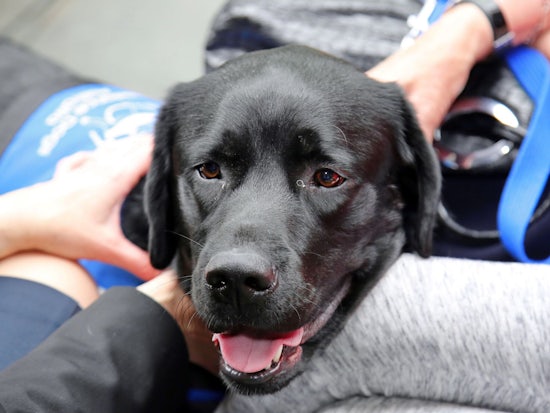
Graduated Dogs4Dementia assistance dog Skip (Source: Dementia Care)
Based on a Scottish project, Dogs4Dementia kicked off in Australia in 2014 as an ‘innovative’ way to keep people living with dementia at home for longer and backed by secure three-year funding support from the Department of Social Services, now the Department of Health.
Now, with the funding having come to an end as of June this year, Head of Implementation, Dementia Centre Marie Alford says the organisation is looking at other options.
“Training an assistance dog is a huge investment and we are currently looking for ongoing funding opportunities,” she says.
“The Dogs4Dementia program funds the cost of purchasing and training the dog and also covers food, vet and insurance costs for the first 12 months, after which the families agree to cover ongoing costs associated with the dog.”
Ms Alford says the initiative uses Labradors, due to their calm nature and intelligence, which are trained by Assistance Dogs Australia.
“They are much more than household pets,” she says.
“As puppies they receive two years of training on general obedience and performing a range of tasks that support people living with dementia and their carers.
“When they have graduated their training they are matched to a household that suits their temperament.
“Once introduced into their new home they receive focused training to perform specific tasks that are particular to that environment and person.
“They then become a working member of the family and help maintain routines, provide physical and emotional grounding and can be a joyful and pleasant distraction.”
Additional benefits shown among participants and their families through the program include greater autonomy, improved emotional wellbeing, increased confidence and quality of social contact as well as increased physical activity and a reduction in carer burden.
She adds that dementia can be quite isolating for everyone involved and that Dogs4Dementia
can play an important role in reducing that isolation.
“Having a dog in the house provides another point of focus for the person living with dementia and their carer,” she explains.
“In 2014 we were keen to trial the Dogs4Dementia program in Australia and research the impact if the dogs on the lives of people living with dementia and their families.
“The findings from this pilot program have demonstrated excellent outcomes and we hope to continue running the program here in Australia with new funding support.
“Individuals and corporate organisations who would like to sponsor a dog are invited to contact us for more information on supporting the initiative that is working to benefit the lives of people living with dementia and their families.”
The last graduation for Dogs4Dementia under the current Department of Health funding from 2014 was held in New South Wales and Victoria last week.
Eligibility for the Dogs4Dementia program is restricted and include requirements such as the person living with dementia must be in the early stages of diagnosis and have a carer living with them and the dog needs to be taken on two walks a day.
More information on the program, eligibility and how to sponsor are available online.





















Comments