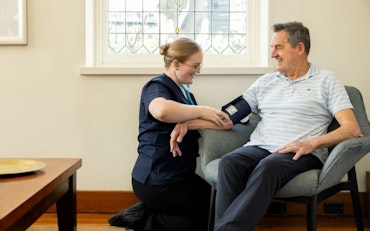


Getting physical is all part of healthy ageing
A two-year government funded study into physical exercise and healthy ageing has come to an end, highlighting the crucial role structured physical exercise and strength building have on improving the health, independence and quality of life for senior Australians.
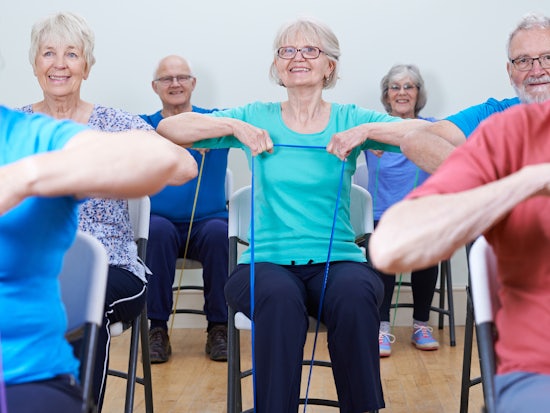
The Muscling Up Against Disability study has yielded “impressive results” from progressive resistance plus balance training (Source: Shutterstock)
The $1.4 million Muscling Up Against Disability study was a collaborative effort between the government and a number of organisations and education facilities such as the University of Queensland and Bond University.
Minister for Aged Care Ken Wyatt says the study has yielded “impressive results” from progressive resistance plus balance training (PRBT) for the 245 participants who ranged in age from 65-91, who were all receiving in-home Commonwealth aged care support.
Minister Wyatt says participants had two PRBT session each week as part of the 24 week program, with sessions supervised by accredited exercise physiologists.
“The benefits were often life-changing and for some participants, were seemingly miraculous,” he explains.
“On average, they more than doubled their strength in their upper body and lower body and core during the 24-week program.”
On average, the study shows program participants registered a 33 percent improvement in leg strength, 13 percent increase in overall physical performance, 23 percent drop in the risk of sarcopenia (muscle wastage), a seven percent reduction in frailty as well as a significant reduction in falls.
The study also notes PBRT as the only exercise mode shown to reduce many of the adverse effects associated with normal ageing, including the reduction in physical disability and chronic disease including type 2 diabetes, osteoporosis and osteoarthritis, all of which increase the requirement for aged care services.
“While strength and balance improved markedly, the study group also recorded reduced depression and anxiety,” Minister Wyatt says.
“What makes these results so important is that the participants chosen were average people receiving in-home care who would not normally exercise in a gym.
“This indicates it’s never too late to start reaping the benefits of structured exercise and that people can push back against ageing and disability throughout their senior years.”
Bond University Associate Professor Justin Keogh was involved in the study that further developed the exercise program that was being delivered at Burnie Brae, saying it “achieved its aim” of demonstrating to the wider Australian and international community, the effectiveness and feasibility of such exercise programs for older adults.
Following the results of the study, he says progressive resistance and balance training should be recommended prescribed to many older adults, just as many of these individuals are prescribed a range of medications to improve their health and wellbeing.
“In order to demonstrate such feasibility, we needed to show that the program was something many older adults would look to initiate and adhere to, the program would have very few adverse events or injuries and that it would be economically viable,” he explains.
“We were very positive with the outcomes of the study and believe that the results clearly demonstrate that similar programs should be offered throughout the country as that such programs have many benefits in terms of maintaining health and independence and that such programs can be offered in an economically sustainable manner for many older adults.”
Associate Professor Keogh adds that the study further demonstrates the importance of exercise professionals such as accredited exercise physiologists who can deliver evidence-based, safe exercise programs to older adults of a range of chronic health conditions.
“It was a great study to be involved with as beyond just demonstrating the benefit of exercise for this older adult population, which we knew was going to be effective anyway,” he says.
“We demonstrated the feasibility of this community-based program and how it could be translated into improvements in usual care for older adults accessing medical and aged care services.”
Dr Anthony Tuckett from University of Queensland was also involved in the study and says the research and its results came at a good time.
“It is fairly obvious that we live in a time of unprecedented population ageing,” he says.
“With this we know there is already and there will be even more demand on an already burdened healthcare system – population ageing plus this demand comes at a cost.
“Exercise is ‘medicine’ – it is an elixir for a better, longer and healthier life [and] what we wanted to know was could we again show this to be true but in a way that could be done in a cost effective manner and format easily replicated in order to become a model, acceptable to our older population, to be rolled out across the country.”
From the results of the study, Dr Tuckett says he was fortunate to talk to the older persons who completed the Muscling Up program and says it is “wonderful” to see the improvements in their health and wellbeing.
“Not only has their strength and physical performance improved, but we have also seen significant improvements in balance, balance confidence, anxiety and depression levels and overall quality of life,” he explains.
“Importantly, those with the highest levels of frailty received the greatest benefit from the progressive resistance training.’
Minister Wyatt says the research by Associate Professor Keogh and the team provides a win-win for seniors and the community by way of offering a type of structured exercise, offering encouragement to seniors to consider resistance training where possible, and to undertake as “wide a range of physical activities as possible”.
“While it improves independence and wellbeing, we know fitter seniors are healthier and need less complex and costly aged care services,” he explains.
“Dancing and yoga are other activities that everyone can embrace, including people in residential care and those living with dementia.
“Trials suggest that as well as improving coordination and balance, physical activity makes people feel happier and sleep better and it may also improve their thinking.”
The Minister made a point of the national guidelines for physical activity, saying their are relevant for people of all ages but stresses that training schedules and activities should be “tailored to individual capacity”.