Delivering aged care services in multicultural Australia – part 3
The third and final part of our ‘Ageing in multicultural Australia’ series, takes a look at the challenges the industry has in meeting staffing needs for an ageing migrant population.
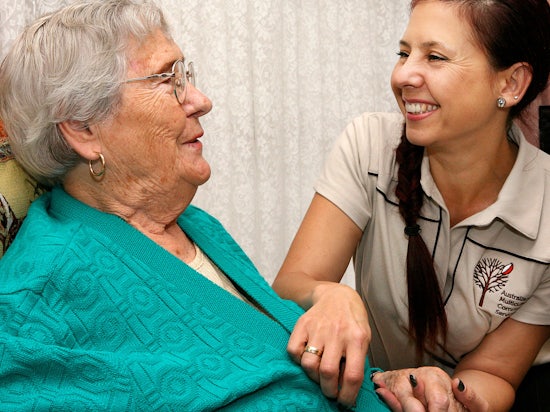
Recruiting staff to work with ageing migrants can be challenging. (Source Australian Multi-Cultured Community Services)
Attracting people to choose a career in aged care is challenging enough for the industry, before factoring in the additional skills needed to work with migrants, such as understanding and knowing the culture and speaking the same language.
It is well-documented as people age they may revert to their mother tongue for a variety of reasons. For some it’s because they aren’t speaking English as much because they are no longer in the workforce and English isn’t spoken at home or in their community, while for others, they didn’t have the opportunity to learn English because there weren’t the teaching resources when they moved to Australia 50 or so years ago.
Even when a provider recruits staff who can speak the language, there is the issue of how many staff to recruit. Andrea McLeod, General Manager Aged Care and Disability Services, Spectrum, points out with consumer directed care, Greek clients may only want Greek speaking workers for instance. “But we need to ensure the right staff numbers if, for instance we have two Greek workers and one phones in sick,” she says.
When running recruitment drives, considerations also need to be given to cultural differences. Ms McLeod points out some cultures may not actually understand the concept of aged care. “The terminology used when targeting staff to work in these areas needs to be carefully looked at,” she explains.
In addition, Elizabeth Drozd, Chief Executive Officer for Australian Multicultural Community Services says direct care can be seen as a bit demeaning in some cultures and needs to be overcome. “Teachers, doctors and lawyers are often the prestige roles in some cultures,” she says.
Up-skilling staff
Training and education for those working with migrants is an area which Sharon Wall, gerontologist and Ageing By Caring director believes should also be reviewed. “Persecution, imprisonment and torture are all important considerations; if a person has a background of PTSD, it requires, I think an understanding of for carers,” she says. “I believe a person feels comforted and supported if they hear their first language; we are often second guessing behaviour [is PTSD related] and so it does change our responses potentially.”
She also feels more ‘love’ needs to be bought into the industry working with educators and trainers to encourage people to think in a more empathetic way. “People can empathise in a nice, but powerful way,” she says.
Ms Drozd also points out there are other ways of supporting ageing migrants. “We purchased an Arabic speaking TV channel and satellite dish for one client; her other women friends now come round to watch it with her,” she says.
Addressing staff shortages
Sponsoring care staff through the Australian Government may be an option; Ms Drozd says her organisation has sponsored social workers who speak a specific language.
Other organisations are training new migrants to help fill the aged care employment gaps. At the end of March, the SkillME project, announced more than ten people from culturally diverse backgrounds had graduated with qualifications to help them get jobs in the disability and aged care sectors.
Supported by the NSW Government and delivered by Metro Assist, the SkillME project works with employers, training organisations, English trainers and recruiters to secure client-focused employment outcomes.
“For employers, there is a strong business case for meeting the needs of the region’s culturally diverse and ageing communities by skilling up recently arrived migrants and refugees desperately in need of work and wanting secure career progression in a growing sector,” says Lou Bacchiella, Metro Assist Chief Executive Officer.
And it is a rapidly growing industry. The 2016 Census showed Australia’s population is getting older and people are living longer – and they are going to need help to continue living in their own homes. Indeed, according to the Productivity Commission, by 2050 the aged care workforce will need to have grown to around 980,000 workers.











![The new Aged Care Act exposure draft is slated for release in December of 2023, but advocates hope to see it rolled out on January 1, 2024. [Source: Shutterstock]](https://agedcareguide-assets.imgix.net/news/articles/wp/agedcareact__0811.jpg?fm=pjpg&w=520&format=auto&q=65)












Comments