
Bringing peace with harp therapy
More than a dozen harpists from Australia, New Zealand and South East Asia will gather at Villa Maria in Melbourne this week for an international symposium on the healing qualities of the instrument, especially for people with dementia or in palliative care.
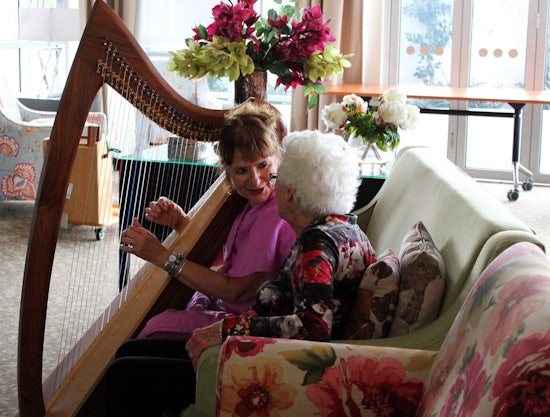
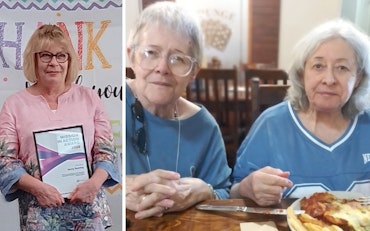
Harpist Carla Whiteley and Villa Maria resident, Eryl Dow.
Studies have shown the sounds and vibrations of the harp help to lower blood pressure, reduce heart rate, anxiety and pain levels, and bring a sense of calm, inner peace and emotional balance to listeners.
Harp therapy is often used for people in palliative care when they are at the end of their lives, calming them and helping with the release of emotions and grieving of their loved ones.
Fourteen harpists from Australia, New Zealand, Hong Kong and Malaysia will spend six days learning harp therapy techniques from renowned American harp therapist Christina Tourin.
Ms Tourin is a second generation harpist and director of the International Harp Therapy Program.
She says most of the harpists are studying level two of the program and will learn how to individualise music based on a person’s mood, breathing tempo, music tastes, resonant tone and elements of music that can help to balance energies.
They also learn how to conduct group sessions, with activities that get a person’s arms moving rhythmically to help with balance.
The symposium is being hosted by Villa Maria’s aged care residence in Wantirna, which has an innovative wellness program for people with dementia.
Australian harp therapist, Carla Whiteley, has run a harp therapy program at the residence for more than a year and she says it has had a clear impact on residents.
Ms Whiteley performs the harp to help calm the residents, does interactive group sessions and plays in the private rooms of those who have been identified as being particularly distressed.
She says harp therapy has been considered a healing instrument since ancient times and is especially supportive for people with dementia, with familiar tunes helping to connect them with their past.
“Therapeutic harp music is based in the science of sound. It is live, acoustic music played for people who may be patients in hospitals or living in aged care facilities to help create a calming environment conducive to the healing process. It also supports their families, visitors and staff,” Ms Whiteley says.
Villa Maria Wantirna Centre manager, Kathleen Collings, claims the alternative therapy aligns with the centre’s holistic model of care.
“At one level you can use the harp for relaxation but it has the capacity to transcend the everyday and reach the depth of the human soul, restoring hope and a sense of calm,” Ms Collings says.
The symposium began yesterday (Sunday, 6 April 2014) and concludes this Friday (11 April 2014).