AWL advocates for an increase of animals in aged care
The aged care sector is being encouraged to embrace more ‘pet friendly’ services that allow the elderly to remain with their pets for as long as possible following the release of the 2017 Pets in Aged Care Study.
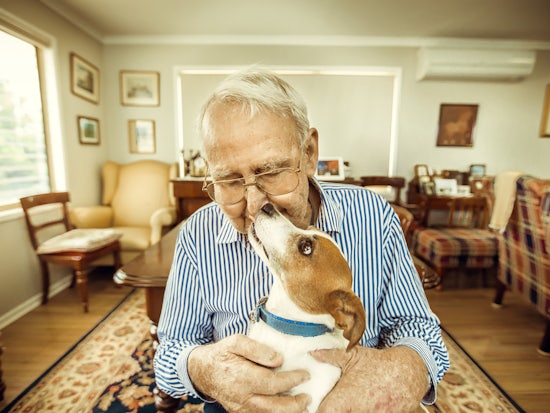
Some aged care facilities are open to pets moving into care with their owners (Source: Freedom Aged Care)
Conducted and released by national animal advocacy organisation, the Animal Welfare League Australia (AWLA), the report reveals that only 18 percent of the nation’s residential aged care facilities allow pets to reside with their owners, and just 9 percent of in-home care providers offering pet-friendly services.
AWLA President Richard Mussell says the draft of the Commonwealth’s new Aged Care Quality Standards, which have a more consumer focus, provides the “perfect opportunity” for the sector to implement a broader range of pet-friendly services throughout the community.
Mr Mussell says Australia’s pet ownership rate (63 percent) is the third-highest in the world, just behind the United States (65 percent) and New Zealand (64 percent), and with the proportion of Australians aged over 65 continuing to grow, he says the aged care sector “must respond” to the increasing demand for services that keep owners and their pets together.
“Maintaining the human-animal bond has proven health benefits for the owner and their pet,” he explains.
“It also reduces animal surrender rates to the rehoming, shelter and care services of AWLA’s six member organisations across the nation.”
Mr Mussell says the 2017 report reveals around 10,000 animals “may have” been surrendered due to elderly-related reasons throughout Australia in 2016, making note of the reasons for surrender which include: owner health, unsuitable pet accommodation at home, inability or unwillingness of family members to care for the pet, and a lack of financial means.
AWLA also makes note of the factors stopping aged care service providers implementing initiatives that keep owners together with their own pets, such as the inability to fund programs, shortages of employees and volunteers who are able or willing to deliver support, and Work Health Safety (WHS), financial or legal concerns.
Despite the statistics and factors around pet-friendly aged care services in Australia, there are some providers, such as Freedom Aged Care who offer majority of their services as ‘pet-friendly’.
Industry Liaison Clinician, Marketing, Home Care Communities Freedom Aged Care Greer Quinlan says the provider has embraced a pet-friendly environment for its residents since inception, noting that most of their communities are pet inclusive.
“Being pet-friendly is not something that immediately comes to mind when thinking aged care,” Ms Quinlan says.
“Often a transition to aged care means downsizing and finding alternative accommodation for a pet, which most people are understandably anxious to do.
“It’ a pleasant surprise for most people to know that a move does not mean parting with their pet, and it can sometimes mean all the difference between staying where they are and making a move.”
Ms Quinlan makes note of the many benefits known to be associated with pets and people in aged care, saying that they provide us with unconditional loving companionship that make them “indispensable members of our families”, adding that they can ease the transition into aged care for residents by providing a sense of normality to everyday life, and are a great “ice-breaker” for meeting other residents or carers, and they aid in bridging the gap, offer more social opportunities as well as providing a reason to get out and go for a walk.
“The emotional and physical benefits of having a pet in our later lives are well documented, pets have an incredible effect on wellbeing by lowering blood pressure, reducing depression, lowering stress levels, reducing loneliness, increasing physical activity, and giving us a sense of purpose,” she says.
“Something as simple as having a pet go through the transition to aged care with a resident helps to provide a sense of comfort during what can sometimes be a very stressful time.”
Ms Quinlan says as part of being pet-friendly, the provider assesses pets and communities to make sure they are compatible before making the move, that residents’ homes are set up to accommodate their pet, with a pet care plan included in the resident’s own care plan to ensure both the resident and their beloved pet receive the care and attention they need.
He adds that for those residents without pets of their own, the provider also offers a number of pet-friendly options, activities and programs.
“For our residents who do not have pets, many of our communities run animal therapy sessions,” Ms Quinlan explains.
“We have had everything from equine therapy, visiting farm animals, RSPCA rescue centre excursions, to an electronic seal carebot named Francis who resides at one of our Toowoomba communities and is an important participant in our dementia therapy there.”
With so many benefits proven through both research and their own experiences, Freedom Aged Care says they “enthusiastically encourage” a pet-friendly approach as the way forward for aged care in Australia, adding that with the ageing population, flexibility for older people to live the life they want and not have to sacrifice lifestyle or pets is now “more important than ever”.











![The new Aged Care Act exposure draft is slated for release in December of 2023, but advocates hope to see it rolled out on January 1, 2024. [Source: Shutterstock]](https://agedcareguide-assets.imgix.net/news/articles/wp/agedcareact__0811.jpg?fm=pjpg&w=520&format=auto&q=65)











Comments