Aged care provider offering ‘Helping Hand’ to launch new technology
New technology developed by a collaboration between researchers, students, and experts from some South Australian universities and a local hospital is currently in its final stage of testing with aged care provider Helping Hand prior to being commercialised with the aim of giving people living with a range of conditions, from cerebral palsy through to arthritis, more control in their daily lives.
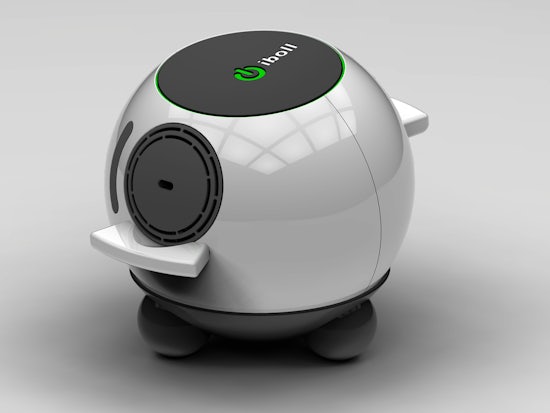
The University of South Australia, Flinders University and the Women’s and Children’s Hospital are behind the development of the i-boll (Source: UniSA)
Developed by the University of South Australia, Flinders University and the Women’s and Children’s Hospital, the i-boll has now been licensed in an agreement with disability service provider Novita, who also specialises in assistive technology for the not-for-profit organisation’s assistive technology division.
Lead Researcher from Flinders University David Hobbs says “the i-boll has both practical and therapeutic applications” having been designed in a collaboration that includes biomedical engineers, industrial designers, neuroscientists, paediatricians, occupational therapists and rehabilitation experts.
“Easier to use than conventional controllers, the i-boll connects with most mobile smart devices that users are already familiar with, making it both highly accessible and cost effective,” Mr Hobbs says.
“Intuitive in design, the novel device can be customised to suit a users’ specific hand impairment such as arthritis, stroke or cerebral palsy.”
Heading the commercialisation front for the i-boll is UniSA’s Dr Stephen Rodda who says the leading edge technology is a “strong example” of how local universities and industries can collaborate to benefit society and the local economy.
He says it has been an “extremely productive research and development collaboration” and that he and the university look forward to Novita delivering the i-boll to the market.
General Manager of Assistive Technology for Novita, Mark stewart, says the provider shares Dr Rodda’s excitement at bringing the innovative i-boll to market globally.
“i-boll has the potential to really change millions of people’s lives worldwide and our goal is to continue to innovate to do just that,” he says.
Currently, the i-boll is in its final phase of consumer testing in association with aged care provider and industry partner Helping Hand, with the technology expected to be in production by early 2019.
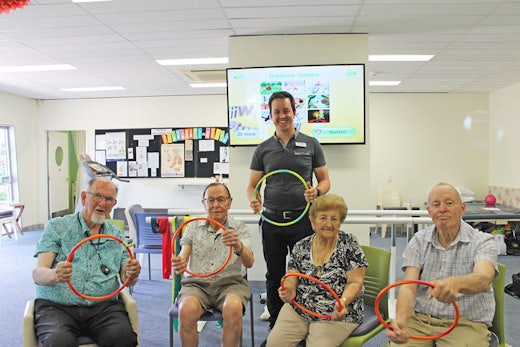
Director of Helping Hand Research and Development Megan Corlis says the focus group made up of Helping Hand North Adelaide residents has recently tested a device modelled on the ‘i-boll’ computer controller in collaboration with university and industry partners.
“It is fantastic to provide an avenue for critical thinking and design engagement and to genuinely facilitate co-design with our residents,” Ms Corlis says.
“[During the trial] the i-boll device was connected to a laptop and the residents played a game to understand how to control the screen images.
“They absolutely loved it and could immediately see the potential for various applications.
“There was some reluctance to start with, but as soon as they put their hands on it, they were immersed in the experience and provided useful feedback to the developers about suggested design changes.”
Ms Corlis says the team “can’t wait” to see the final product which is expected to be in production by early 2019.










![The new Aged Care Act exposure draft is slated for release in December of 2023, but advocates hope to see it rolled out on January 1, 2024. [Source: Shutterstock]](https://agedcareguide-assets.imgix.net/news/articles/wp/agedcareact__0811.jpg?fm=pjpg&w=520&format=auto&q=65)










Comments