

Super contribution changes could improve 370,000 aged care workers’ retirement outcomes
With the recent government announcement, aged care workers should still keep track of their super contributions
- Advice ,
- Finance ,
- Government
![<p>The Australian Government will require employers to pay super to workers more frequently, improving their financial outcomes in the future. [Source: Shutterstock]</p>](https://agedcareguide-assets.imgix.net/news/articles/wp/happywoman1809.jpg?fm=pjpg&format=auto&w=550&q=65)
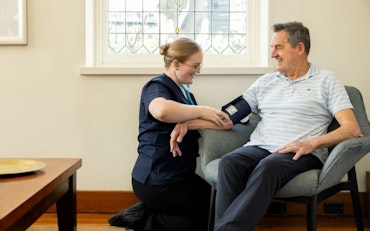
The Australian Government will require employers to pay super to workers more frequently, improving their financial outcomes in the future. [Source: Shutterstock]
Key points:
- Changes to employer super contributions mean that aged care workers may be in better financial stead for future retirement
- Approximately 370,000 aged care workers are employed in Australia, according to recent data from the Department of Health and Aged Care
- The Australian Taxation Office recently announced that it is still holding $17.8 billion dollars of unclaimed super and that Australians should keep on top of their super balances
The Australian Government has recently announced that from July 1, 2026, employers must pay super contributions each pay cycle, meaning that Australians such as aged care workers will benefit from greater financial security.
Currently, employers should pay super into employee super funds every quarter. However, this can lead to missed contributions and employers may face large payroll liabilities.
Approximately $3.6 billion dollars was not paid into super contributions as it should have been between 2020 – 2021, according to the Australian Government Treasury.
Council on the Ageing Australia Chief Executive Officer Patricia Sparrow highlighted that the changes will mean Australians such as aged care workers will find it easier to manage and track their super contributions.
“This change will help more Australians retire with dignity,” she said.
“As Australians live longer and healthier, we need to ensure the retirement phase of superannuation is set up to better support older Australians and paying super on payday is crucial to that.
“[…] COTA [has] long advocated for superannuation to be paid on payday, as opposed to quarterly. It’s fantastic that the Federal Government has listened to the needs of all Australians.
“[…] The payday super reform will hopefully encourage people to remain connected with all of their super and help to deliver more income to fund a dignified retirement.
“[…] This won’t solve all the problems people face when it comes to retirement income, but it’s a common-sense change that will benefit help more Australians retire with dignity like they deserve to.”
Approximately 370,000 people work in Australian aged care roles, including residential and home care.
However, even with the changes to super contributions scheduled for 2026, aged care workers should take control of their finances and ensure that all of their super is accounted for.
Australian Taxation Office Deputy Commissioner Emma Rosenzweig emphasised that Australian workers should be aware of their super balance to avoid losing track of super accounts in the future.
“Since 2021, the ATO has reunited almost $6.4 billion of unclaimed super with its owners. But there is still more than $17.8 billion waiting to be found,” she said.
“If you’ve changed jobs, moved house or simply forgotten to update your details, you may have lost or unclaimed super.
“We’re urging Australians to check if some of the $17.8 billion in lost and unclaimed super belongs to them.
“Superannuation is a key part of your retirement and we want to make sure Australians are claiming the investment they’ve worked for.”
Aged care workers should check for unclaimed superannuation funds or multiple accounts by:
- visiting the Australian Taxation Office website;
- confirming their contact details;
- checking their super balances; and
- considering combining accounts to consolidate their funds.
Have you combined all your super?
Let the team at Talking Aged Care know on social media.
For more information and news in the aged care industry, subscribe to our free newsletter.
Relevant content:
New Aged Care Act: what’s happening and when?
New Aged Care Act unveiled: what happened to make it happen?
At 69 years old, Mary Hanna was the oldest Olympian this year