

Stopping milk from going bad could help scientists cure age-related diseases
Finding out why long-life milk goes off could help prevent diseases
like Alzheimer’s, Parkinson’s and Type 2 Diabetes, which affect about
500 million people worldwide.
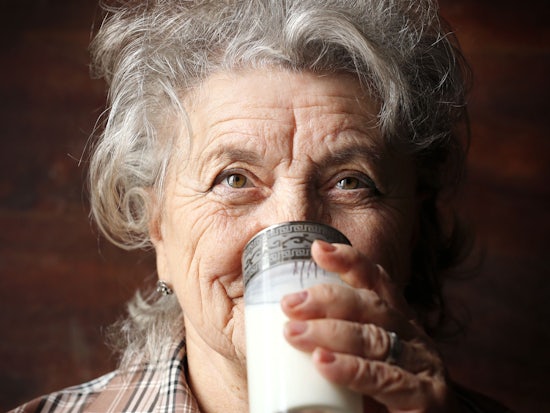
If scientists can find a way to stop milk from going bad, the knowledge could translate into a cure for age-related diseases (Source: Shutterstock)
A study by a team of Australian and international researchers found that the gel that forms when ultra-high temperature, or long life, milk expires was similar to plaque deposits that cause some diseases when they occur in the human body.
“What happens with age, with UHT milk, is you get formation of these gels,” said Professor Carver, who co-led the study, in an Australian National University video about the research “and that’s a result of the formation of Amyloid fibrils, we’ve discovered.”
Amyloid fibrils are the result of two unrelated proteins in long life milk, joining together into clusters over a period of several months. Those same clusters are also commonly found in plaque deposits that form on the brains of people with Alzheimer’s and Parkinson’s or the pancreases of people with Type 2 Diabetes.
Professor Carver told Talking Aged Care that this research was an important breakthrough, because “the co-aggregation of two fibril-forming proteins that are not disease-related and have very different structures in their native [non-fibrillar] state is novel.”
He says the co-aggregation of disease related problems “will be a future research area that we will be investigating,” and even suggests this breakthrough might help the dairy industry stop long-life milk from spoiling.
However when asked if consumers should be worried about drinking milk in the future, Professor Carver said he was “confident” that milk is safe to drink, since “we have been doing so for thousands of years without too many adverse effects.”
It’s highly unlikely that the Amyloid fibrils would be able to move from the stomach to the brain, “particularly across the blood-brain barrier,” says Professor Carver.
Instead scientists hope that if they can find a way to stop the milk forming Amyloid gel and going bad, the knowledge could translate into a cure for age-related diseases.
Professor Carver says that we have made “major progress” in the past 15 years toward understanding protein aggregation, and though we are still a ways off from developing a cure, this research “will facilitate the design of drugs, in particular to prevent protein aggregation from occurring.”