

Pension age increase may lead to lower birth rate
Without grandmothers on the Age Pension, their daughters are choosing to postpone childbirth according to a new study.
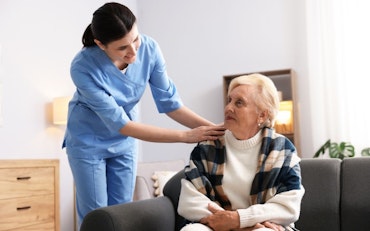
![<p>The Age Pension eligibility requirements may have started a domino effect that’s leading to fewer babies across Australia. [Source: iStock]</p>](https://agedcareguide-assets.imgix.net/news/articles/wp/pension_2402.jpg?fm=pjpg&format=auto&w=550&q=65)
The Age Pension eligibility requirements may have started a domino effect that’s leading to fewer babies across Australia. [Source: iStock]
A new study from the e61 Institute has revealed that raising the pension age for women has reduced Australia’s birth rate by delaying grandmothers’ retirement and limiting their availability for childcare.
Using data from the Household, Income and Labour Dynamics in Australia Survey from 2001 to 2022, the study finds that women whose mothers were not yet old enough for the Age Pension were less likely to have children, with the likelihood decreasing from 73.5 percent to 69 percent.
Those women also had fewer children on average at 1.47 kids compared to 1.56 for women whose mothers had qualified for the pension.
The maximum base rate of the Age Pension is $1,047.10 for singles and $1,578.60 for couples — or $789.30 for each partner. When combined with the Maximum Pension Supplement and the Energy Supplement, a single person can expect to receive $1,144.40 and a couple will receive $1,725.20 combined.
Between 1995 and 2023, the pension age for women gradually increased from 60 to 67, delaying grandmothers’ retirement. The employment rate among grandmothers eligible for the pension is 25 percent compared to 36 percent for those who are not. The research found that eligible grandmothers work 3.9 fewer hours per week.
Research Manager at e61, Pelin Akyol said raising the pension age has kept women contributing in the workforce for longer, but the trade-off looks like a reduction in their daughters’ fertility rates.
“This may be because women are more likely to have children when their mothers are available to help them with childcare,” she said.
“We find that grandmothers’ pension eligibility has a large impact on fertility, similar to the impact of the introduction of paid parental leave, which increased the average number of births by five percent.
“The effects were even greater among women with lower wealth and education levels, suggesting they rely more on grandparental childcare.
“With Australia’s fertility rate at a historic low of 1.5 births per woman, policymakers should carefully consider impacts on fertility when designing policies that encourage labour force participation among the older population.”
As of March 31, 2023, around 2.8 million people aged 65 and over received income support payments, equating to 63 percent of the population aged 65 and over. Of these, the vast majority — 92 percent or 2.6 million — received the Age Pension.
Due to Australia’s ageing population, the number of people receiving income support has grown steadily over the past eight years, but the percentage of the population over the age of 65 receiving income support has declined.
This is because the population aged 65 and over is growing more than twice as quickly as the number of people in this age group receiving income support.
The study isolated the impact of pension eligibility on fertility by comparing similar women whose mothers just qualified for the pension based on their age to those whose mothers had to keep working due to the gradual pension age increase.
Has the Age Pension made an impact on the life choices of your family and has it influenced your lifestyle? Let the team at Talking Aged Care know and subscribe to the newsletter for more information, news and industry updates.
Related content:
What do I need to prepare for my Age Pension application?