

“Curse of ageism” occurs in every second person worldwide
The World Health Organisation (WHO) has released a report from the United Nations (UN) which found that every second person in the world is believed to hold ageist attitudes against older people.
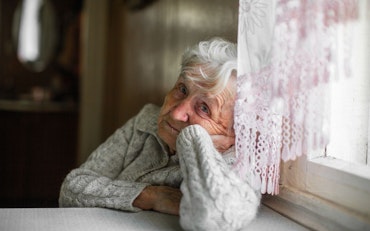
![<p>The report estimates that one in two people hold ageist views. [Source: iStock]</p>](https://agedcareguide-assets.imgix.net/news/articles/news/articles/Curse-of-ageism-24_3_2021.jpg?fm=pjpg&format=auto&w=550&q=65)
The report estimates that one in two people hold ageist views. [Source: iStock]
In this report, the UN says that ageist attitudes can lead to poorer physical and mental health, reduced quality of life, increased social and loneliness, greater financial insecurity, premature death, and costs societies around the world billions of dollars each year.
The WHO, Office of the High Commissioner for Human Rights (OHCHR), the United Nations Department of Economic and Social Affairs (UN DESA), and United Nations Population Fund (UNFPA) are calling for action against ageism.
This includes better measurement and reporting of the issue to expose ageism for what the organisations describe as an ‘insidious scourge on society’.
The report also believes the current response to the COVID-19 pandemic has shown how widespread ageism is in society, with older and younger people being stereotyped in public discourse and on social media.
For example, age has been one reason used as the sole criteria for access to medical care, lifesaving therapies and for physical isolation.
Director-General of WHO, Dr Tedros Adhanom Ghebreyesus, says, “As countries seek to recover and rebuild from the pandemic, we cannot let age-based stereotypes, prejudice and discrimination limit opportunities to secure the health, well-being and dignity of people everywhere.
“This report outlines the nature and scale of the problem but also offers solutions in the form of evidence-based interventions to end ageism at all stages.”
With this report, the WHO and UN are launching a global campaign to combat ageism in all factors of life.
In 2020, a systematic review found that in 85 percent of 149 studies age was the determiner of who received certain medical procedures or treatments.
The WHO also highlights that older adults, and younger adults, are very often disadvantaged in the workplace, including access to specialising training and education which seems to decline with age.
Assistant Secretary-General for Policy Coordination and Inter-Agency Affairs in the Department of Economic and Social Affairs, Maria-Francesca Spatolisano, says, “Ageism towards younger and older people is prevalent, unrecognized, unchallenged and has far-reaching consequences for our economies and societies.
“Together, we can prevent this. Join the movement and combat ageism.”
The WHO and UN estimate that 6.3 million cases of depression across the globe may be attributed to ageism.
Ageism also intersects and compounds on other forms of bias, discrimination and disadvantage, like sex, race, and disability, which leads to negative impacts on peoples health and wellbeing.
Additionally, the effect on the Australian economy amounts to billions. If 5 percent more people aged 55 and over were employed, there would be a positive impact of $48 billion injected into the national economy annually.
Chief Advocate for peak body, National Seniors Australia, Ian Henschke, says that sexism issues in Canberra have been a dominating factor in the headlines for the last few months but that other destructive forms of ‘isms’ are just as prevalent in Australian society.
“The World Health Organisation reminded us of the curse of ageism when it released a groundbreaking report,” explains Mr Henschke
“…As a developed country Australia should be leading the way fighting ageism, and in many ways, we are, but we’re also guilty of doing the opposite.
“The Royal Commission into Aged Care Quality and Safety highlighted the ways we neglect our older people most obviously by rationing care. By providing inadequate care we make them suffer.
“We now have a list of 148 recommendations to fix the broken system. Scott Morrison promised he would restore faith in the system.
“The Government says it will respond in full by the end of May. We watch and wait and hope the present problems surrounding sexism won’t push addressing systemic ageism off the agenda.”
Mr Henschke adds that there have been more than 20 reports in the past 20 years outlining the failings in the aged care system and the poor treatment of the elderly. He wonders whether the lack of focus on ageism throughout the decades is because Australia is ageist.
He says that the Commissioners had highlighted ageism as a root cause of problems in aged care. So while funding plays a part in fixing aged care, unless attitudes towards the elderly changes, the funding won’t solve the fundamental problem.
National Seniors is trying to combat ageism more broadly, not only for seniors but for all Australians through their ‘Every Age Counts’ campaign.
“As a society we all share part of the blame… The [Every Age Counts] campaign says ageism is wrong at whatever age it occurs. It’s wrong to mistreat young people and categorise them and stereotyping them,” says Mr Henschke.
“In the same way we should not stereotype people in their mid-life and think of them as being somehow inferior to a younger person. Nor the elderly.
“We all have the basic human right of being treated with respect and dignity regardless of our age.”
To read the full report on global ageism or to find out how you or your organisation can help combat ageism, visit the World Health Organisation’s website.
To learn more about the Every Age Counts campaign, head to the National Seniors website.