

Carer support model looks to expand
One year on from ‘open-sourcing’ their carer support model, The Australian Centre for Social Innovation (TACSI) Weavers program now is working to further expand and adapt the model into disability, palliative care, and community and residential care.
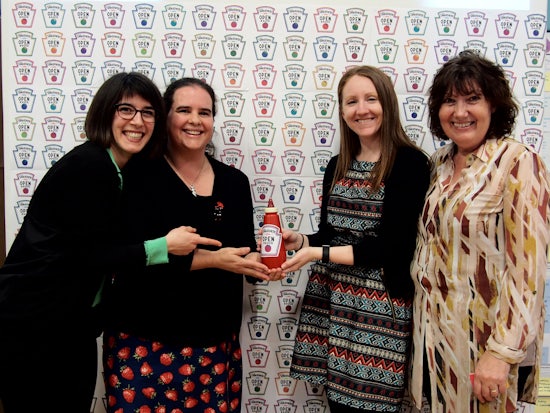
The TACSI project team – Ione, Kerry, Erin and Barb – at the open source launch in 2016 (Source: TACSI)
The peer-to-peer support model, which aims to support carers to address the significant challenges of caring for a loved one through the guidance of volunteers with lived caring experience, was launched as a free resource through ‘open sourcing’ in August 2016, following two successful test and trial periods in Adelaide.
Now, one year on from becoming available as a free resource, TACSI Senior Social Innovator Erin Martin says the organisation has seen over 100 people register to access the open source materials from all over South Australia, the country and even internationally.
“It’s been a huge year since the open-source launch in August 2016,” she says.
“We now have two new Weavers sites in Australia and a third on its way.
“One at a residential aged care facility in Adelaide where we worked closely with South Australian care provider Helping Hand to implement the model and the other a Queensland based organisation, FSG Australia, who independently implemented Weavers utilising the open-source materials.
“Back in the office we have been working closely with our project team – which includes 10 of the original TACSI Weaver volunteers involved in the trial – to ‘improve the sauce’.”
She says the improvements to the model include adding closed captioning to Weavers open-source video to make it accessible for those that are hearing impaired, and undertaking a cost-benefit analysis from an implementer’s perspective.
“The cost analysis confirmed for us that the Weavers is a low-cost, high-impact service with a cost benefit ratio of 1:13,” Ms Martin explains.
“This essentially means that for every $1 spent on Weavers by an organisation implementing the model, there are $13 in benefits for their community.”
As well as noting the dollar benefits, Ms Martin says there are a number of benefits for all involved in the peer support program.
“The value of receiving support from someone with a lived experience of caring is key,” Ms Martin says.
“We heard from carers that the greatest support they received from Weaver volunteers was the emotional connection that they could have with someone who had been there themselves and understood the complexities of caring for a loved one.
“Outcomes for carers include decreased depression, increased self efficacy in the carer role, and increased assertiveness about their own needs
“For those being cared for there is the feeling of more attentive caring by their carer as well as improved use of services, while Weavers volunteers feel an increased sense of purpose and meaning, and training and professional development through the program.
“Without organisations offering a peer model of support such as weavers, we are a community at risk of having carers continue to slip through the gaps and not access the support that they need to sustain them in their caring role and work through the emotional challenges to make the right decision for them and their loved one.”
With positive results for the program and all involved, Ms Martin says another busy year is ahead of the TACSI and Weavers team.
“Our goal is to partner with more organisations in different contexts such as disability, palliative care,community care and residential aged care – to adapt the model to best suit carers in that particular context,” she says.
“We would like to see a range of implementation sites for us to further understand the impact that the Weavers model can have on carers in our community who we know are one of the most valuable cohorts in Australia.”
More information on the program and access to the free Weavers resources are available online, by emailing, or calling (08) 7325 4949.