

Bulk billing is changing – how will it affect you?
The rising costs of providing health services is leading General Practitioners (GPs) to pass on more of the costs to patients, which includes older Australians.
![<p>A recent Healthed survey has found almost a quarter of GPs (22 percent) have switched from a bulk billing model to mixed or private billing. [Source: iStock]</p>](https://agedcareguide-assets.imgix.net/news/articles/news/articles/27_9_2022gp.jpg?fm=pjpg&format=auto&w=550&q=65)
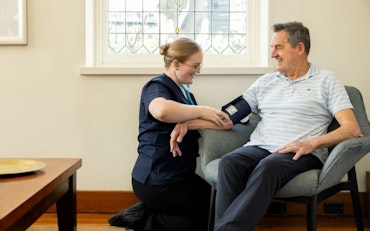
A recent Healthed survey has found almost a quarter of GPs (22 percent) have switched from a bulk billing model to mixed or private billing. [Source: iStock]
Although the cost of seeing a GP is covered under Medicare, the rebates given to doctors through Medicare are not going up at the rate that doctors need them to, meaning they are not covering the full costs of health appointments.
A recent Healthed survey has found almost a quarter of GPs (22 percent) have switched from a bulk billing model to mixed or private billing and 15 percent more are considering changing to better cover their costs.
In last year’s survey on the same topic, 10 percent of GPs had moved away from bulk billing, showing a worrying trend that more and more doctors’ clinics may move away from bulk billing.
So why is the shift away from bulk billing an issue for older Australians?
Rising costs
The less bulk billing is used by GPs, the more people will be paying for their healthcare – as it won’t be covered by Medicare.
The Royal Australian College of General Practitioners (RACGP) President, Adjunct Professor Karen Price, says that it’s likely many GPs will be forced to charge more, disproportionately affecting people with low incomes such as people on the Age Pension.
“General practice is up against it and unless Government boosts investment in GP care, more and more practices will be forced to pass the cost on to patients,” she said.
“That is not a decision taken lightly, and no one relishes the thought of asking their patients to pay more. Particularly those struggling to make ends meet with the rising cost of living.
“But practices have no other choice because their costs are rising, and Medicare rebates simply haven’t kept pace with the cost of providing high-quality care. Our hands are tied. We need help desperately.”
While higher GP consult costs, usually a gap fee of more than $30 per standard 15 minute appointment, may not seem like much, these costs will be difficult for people with limited income to afford.
For older Australians on the Age Pension or living on a low retirement income, the cost of regular consults will become harder to justify and it could force people to make hard decisions about whether their health is more important than other necessities.
Older people also are more likely to have multiple health conditions and more complex health conditions, which means they may need longer or more frequent, and therefore more costly, appointments with their doctor.
This makes it even harder to afford to manage health conditions.
Older Australians who cannot afford the cost of regularly seeing their doctor are also more likely to end up needing healthcare through hospitals and present more often to emergency departments.
Treating health conditions only when they reach the emergency stage is detrimental to the overall health, wellbeing and independence of older Australians in particular, and something both health professionals and the Government want to prevent by providing care as soon as possible.
What can you do?
While there may not be much you can do about the cost of seeing your regular GP, you may be able to shop around and find a clinic that will still bulk bill for you.
If you cannot find a clinic that offers bulk billing across the board and is close enough to where you live, you might like to talk to the doctor you regularly see about whether they could offer a guarantee that you specifically will always be bulk billed.
Some clinics might offer this for patients who cannot afford to be charged a gap fee and are regular clients.
Another option you can look into, if you haven’t already, is to find out whether you are eligible for a Commonwealth Seniors Health Card, as this will mean you are more likely to get bulk billed for all visits to healthcare clinics, depending on what your doctor decides.
The Federal Government is also rolling out 50 Urgent Care Clinics across Australia, which are designed to take some pressure off of emergency departments and provide health care to people with minor emergencies. This includes health issues like minor broken bones and cuts or abrasions.
Have you noticed an increase in cost when visiting your GP? Tell us in the comments below.