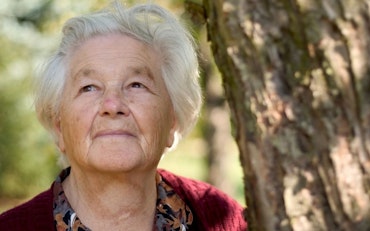


70-year-olds smarter than they used to be

H70, a long term Swedish research study into older people, shows that today’s 70-year-olds do far better in intelligence tests than their predecessors.
It has also become more difficult to detect dementia in its early stages, though forgetfulness is still an early symptom, the University of Gothenburg H70 study says.
The H70 study included tests that measure memory, speed, language, logic and spatial awareness, and results were published in the American journal, Neurology.
The 70-year-olds born in 1930 and examined in 2000 performed better in the intelligence tests than their predecessors born in 1901-02 and examined in 1971. There were no differences in test results between 70-year-olds who developed dementia and those who did not over the next five years in the group born in 1930 and examined in 2000, while many of the tests identified early signs of dementia in the group born in 1901-02.
“The improvement can partly be explained by better pre- and neonatal care, better nutrition, higher quality of education, better treatment of high blood pressure and other vascular diseases, and not least the higher intellectual requirements of today’s society, where access to advanced technology, television and the Internet has become part of everyday life,” says researcher Dr Simona Sacuiu.
The study showed that memory problems were the only predictor of which 70-year-olds were at risk of developing dementia. However, far from all of the 70-year-olds with a poor memory went on to develop the illness.
“That’s why it’s important for people with memory problems to receive a thorough examination,” said Dr Sacuiu.
“If we are to identify dementia effectively at an early stage, we need good tools that include psychometric tests. However, these must constantly be adapted to new generations, as older people are performing better and better in standardised psychometric tests.”
At the same time, the incidence of dementia remained unchanged it is just as common between the age of 70 and 75 today as it was 30 years ago. The study included over 800 dementia-free 70-year-olds, 5% of whom went on to develop the illness over the subsequent five years.
“Learning more about the early signs of dementia means that patients may get help and support more quickly,” says Dr Sacuiu.