


Grant to support improved food experiences in aged care
More appetising, fresh and tasty meals are headed for Australian nursing homes thanks to celebrity cook Maggie Beer.
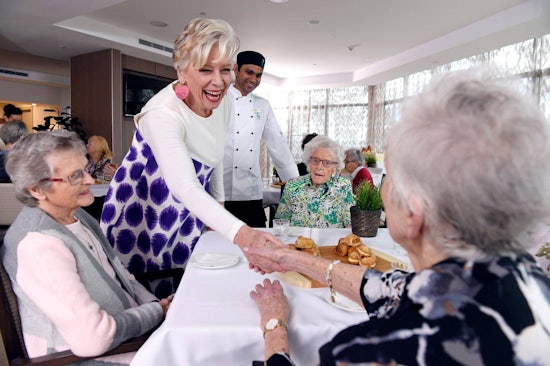
The Maggie Beer Foundation was launched in 2014 to improve the food experiences for older Australians in nursing homes (Source: Maggie Beer Foundation)
The Maggie Beer Foundation (MBF) recently received a $500,000 Australian Government grant to fund a new training program for aged care cooks and chefs across the country – the first of its kind in Australia.
The former Senior Australian of the Year, who has been advocating to improve food served in aged care facilities for the past decade, says MBF has been running face-to-face training courses since 2014.
“Chefs and cooks are at the frontline in aged care and there is so much we can do to help them bring life-altering change to so many older Australians,” Ms Beer says. “I am thrilled and delighted that the Federal Government has chosen to support our training programs.”
“This wonderful support will enable us to help cooks and chefs right across Australia to provide enjoyable, appetising and nutritious food to older people.”
The first year of the online program consists of 11 training modules, including ‘High Energy and Protein’, ‘Texture Modification’ and ‘The Dining Environment’, are designed to improve the taste and nutritional content of meals made for those over the age of 70.
The modules are being created and will be distributed in cooperation with hospitality training centre William Angliss Institute and aged care training organisation Altura Learning.
“These two partners are highly credentialed and the leaders in their fields. Together we will create high quality, practical training which will make an immediate difference to the lives of older Australians,” Ms Beer says.
Altura Learning Chief Executive Officer (CEO) Yvie Webley says it’s a privilege to be working on the program.
“Like the MBF, Altura Learning believe that through this training, there will be a significant improvement in the current structure of training courses for chefs who wish to work in the residential aged care and home care sector.”
A 2017 study of over 800 Australian aged care facilities led by Gold Coast dietician Dr Cherie Hugo showed, on average, nursing homes were only spending $6.08 on food per resident at that time – $2 less than what was being spent on Australian prisoners.
Food quality has also been a hot topic leading up to and during the Royal Commission into Aged Care Quality and Safety, with several witnesses speaking about the quality of food in nursing homes, and the fact that many residents require assistance to eat meals, during hearings in Adelaide earlier this month.
Paul Versteege of the Combined Pensioners and Superannuants Association of NSW, who gave evidence at the hearings, says there are signs that up to half of those in aged care are “still malnourished” and that it’s “a very obvious breach of safety.”