New pension age signals unsustainable trend, experts say
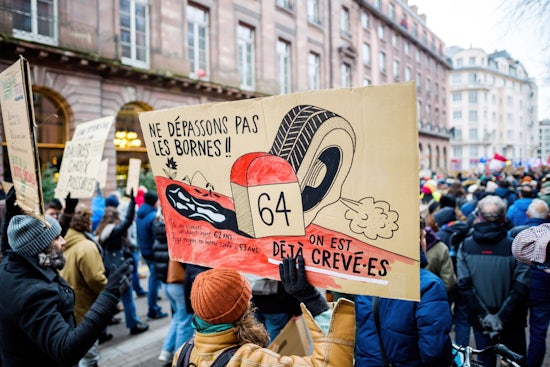
Earlier this month, as the pension age in France was increased from 62 to 64, nearly a million people turned out in protest and began to riot… As for Australia, the Liberal party unveiled plans in 2014 to increase the age to 70 by 2035.
(Source: Hadrian via Shutterstock)
On July 1, the new pension age of 67 will come into effect for Australians born in or after January 1957, after being set at age 65 over 100 years ago but experts say the increase in age will put pressure on the system.
At the time the pension age of 65 was put into place in Australia, the life expectancy had been drastically lower than it is today.
Earlier this month, as the pension age in France was increased from 62 to 64, nearly a million people turned out in protest and began to riot… As for Australia, the Liberal party unveiled plans in 2014 to increase the age to 70 by 2035.
Professor Hanlin Shang, a statistician at Macquarie University, along with Monash University Professors Rob Hyndman and Yijun Zeng believe that increasing the pension age to 70 by 2035 isn’t sustainable.
However, their work shows that increasing the pension age is still necessary, finding that a gradual increase to keep up with growing trends would be best.
Professor Shang, along with co-authors Hyndman and Zeng concluded in a paper published in the Australian and New Zealand Journal of Statistics, that the pension age should be increased to 68 by 2030, 69 by 2036 and 70 by 2050.
“Less people in the working group and more in retirement will make the old age dependency ratio (OADR) higher,” said Professor Shang.
“What this means is there is less [sic] working people to support elderly people.
“With more elderly people in the population, this will create a burden for the government pension system.”
The model that was published in the Journal of Statistics points to 23 percent as the ideal ratio between working people and pensioners, as the latest data from 2018 suggests that going over that would require additional Government support.
“The ratio comprises of two [sic] elements. Firstly, it’s the number of people aged over the pension age and in retirement divided by the number of working people aged between 15 years old and retirement age.”
Professor Shang suggested that to increase the rate of people working in the country to support pensioners and keep the ratio afloat, the nation either had to address the birth rate of its people or increase migration to Australia.
“Thanks to advancements in medicine and technology, people are living longer, although not necessarily healthier. The number of people working is decreasing, and birth rates are low. In 1961, the total birth rate was 3.5 babies per female. In 2020, this was 1.58.
Regarding the pension increase in France, which President Emmanuel Macron had defended as a needed change for the economy, Professor Shang concluded that gradual change can keep up with trends.
“The increase was sudden. Those close to retirement now have to work an extra two years and they’re unhappy. The reality is the government pension system is not sustainable at 62 years.
“France has to increase it for the same reasons as Australia. A gradual trajectory increase would have been a better approach.”