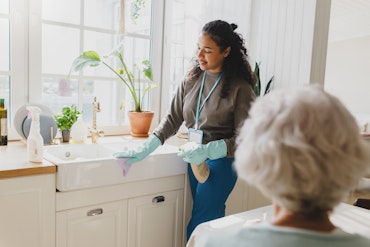
Young people ready to join the aged care discussion
Why is it that when we talk about aged care we don’t see young professionals at the table? Samantha Bowen looks at how the younger generation engages with the aged care industry.

“When we talk about aged care, we don’t see young professionals at the table” – Samantha Bowen (Source: Yael Stempler)
“With the new Federal Aged Care Workforce Taskforce announced, it is loud and clear, we must look at how we recruit and retain a passionate workforce. It’s a Federal priority.
But with the majority of our employees looking for retirement in the next 10-15 years, just when the massive influx of Baby Boomers will be entering the aged care system, the question is are we ready for this challenge?
Our organisations, industry bodies, and the Federal Government certainly don’t think so. The World Health Organisation (2013) states that worldwide the healthcare workforce is going to be 12.9 million workers short in the year 2035. We know that young people aren’t looking to aged care careers. With it viewed as a low paid, overworked bureaucracy, how do we ensure graduates and young leaders see aged care as an employer that understands them and their goals/careers?
I recently attended Canberra to attend an Unconference (the Junkee Junket) with 150+ young people (under 40) to hear what the young thought of our aged care industry.
What I found, surprised me. Some had experiences of helping their grandparents find services; others visited their grandparents in residential care homes. They knew and understood that aged care and working with the elderly was an evolving issue, one worthy of being involved in. So why didn’t they see this as a career to pursue?
They were highly aware of the challenges our workers face; poor pay, overworked employees, and known experiences of workplace issues. With this constant negative messaging reinforced on social and mainstream media – elder abuse, staff shortages, striking workers, and poor care standards – these stories contribute to young people rejecting the notion of working in aged care organisations.
The delegates weren’t only focused on the negatives. They loved hearing about intergenerational kindergartens or students living in aged care facilities and shared great initiatives seen in aged care like HenPower and Tea Tech & Tales. One delegate had built a great platform to support connections with older males in our communities (oldmate.org.au). The ideas flowed, solutions were discusses, and the difference they could make in older people’s lives were highlighted. They shared their positive experiences and the possibilities for ongoing change. All encouraging each other to continue to explore opportunities to share their skills, knowledge, and passions to build a stronger aged care industry. Many craved someone (their own age) to talk to and explore options on how to get involved in ways that suited them.
When we talk about aged care, we don’t see young professionals at the table. We know grandchildren, and young people are involved in the aged care industry as employees, volunteers, board members, and social entrepreneurs. On top of this negative messages are stopping young people from exploring opportunities and reaching out to support our industry (and our elders).
How do we get young people to engage with our industry and see they are part of it? How do we reach out of our own ‘bubble’ to do this with authenticity and openness?
With so many opportunities (clinical and non-clinical) available in aged care – entrepreneurship, nursing, board directorships and technology – there is an avenue to increase the profile of the ageing industry with young people. They want to care. They want to understand how to get involved and contribute (in their own way). Let’s begin by inviting them to the discussion.”

Samantha Bowen is the Founding Director of Acorn Network. Her focus is to inspire us all to get involved and see the opportunities within our aged care sector. She is a Federal Advisory Board Member for NNIDR, an international speaker, an advocate for young leaders in aged care, and firmly believes that now is the time to count the leaders around us to build a future we all want to grow old in.