

Nine recommendations for improved dementia care
Dementia is a global concern and peak advocacy groups have called for greater cultural awareness.
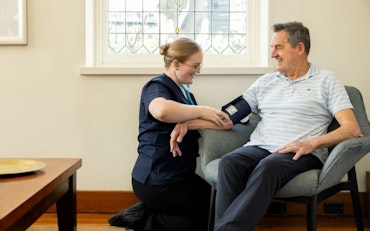
![<p>Last year, dementia was the second leading cause of death in Australia and the leading cause of death for women. [Source: Shutterstock]</p>](https://agedcareguide-assets.imgix.net/news/articles/wp/Friendlycaregiverdementia.jpg?fm=pjpg&format=auto&w=550&q=65)
Last year, dementia was the second leading cause of death in Australia and the leading cause of death for women. [Source: Shutterstock]
Key points:
- Palliative Care Australia and Dementia Australia have listed nine recommendations to deliver improved care for people living with dementia and their families
- The need for palliative care is predicted to increase by 50 percent in the next decade and double by 2050
- A recent study published in the Journals of Gerontology found that that people with dementia were less likely to receive hospice care in their last month of life
The Australian Institute of Health and Welfare reported that dementia had overtaken coronary heart disease as the leading cause of disease burden among Australians aged 65 and over, as of February, 2023.
The report highlighted that there had been 230,000 hours of healthy life lost due to dementia in 2022 — an increase of 61 percent from 2011.
Palliative Care Australia’s Chief Executive Officer Camilla Rowland announced that these statistics pose “the biggest health issue facing Australians over 65 years.”
“We need to better integrate dementia care and palliative care so that the 400,000 Australians currently living with dementia can make the most of life — and for a lot of those people, that will mean many years of quality living and relationships,” the CEO said.
“We look forward to the continued interest of Minister Butler in this work, the reform agenda he and Minister Wells and Assistant Minister Kearney are leading is a foundation for the change we want to see, but more needs to be done and we are ready to play our part.
PCA and Dementia Australia updated a long-standing joint policy statement as part of ongoing advocacy efforts in the face of increasing demand for care. The nine recommendations were introduced to meet the needs of workforce training and greater quality of care:
Recommendations
- Encourage early involvement of the person with dementia and their family members and carers, in discussions about palliative care
- Promote a flexible model of palliative care which enables health and care professionals to provide the right care, at the right time and in the right setting to accommodate the changing needs of people living with dementia and their carers, as the condition progresses
- Ensure improved access to specialist palliative care services in the community to address the complex needs of people living with dementia and their carers and to enable greater choice in the type of care that is provided
- Support compulsory dementia and palliative care education for all health and care professionals involved in the delivery of care for people living with dementia; how to identify, care for and respond to changed behaviour and communication challenges and the assessment of symptoms such as pain and distress in this context and approaches to advance care planning and end-of-life care
- Advocate for all health and aged care facilities to be equipped and supported to provide appropriate care to people with changed behaviour so that no person is excluded from these services on this basis
- Promote improved access to information and discussions with health professionals, to encourage people living with dementia and their family members and carers to document their end-of-life care wishes in advance care plans as soon as possible following a diagnosis or onset of symptoms
- Advocate for improved access to respite and other supports and services for families and carers of people living with dementia
- Support the implementation of nationally consistent advance care planning legislation to reduce jurisdictional confusion, provide protection to health professionals and community members; allow people living with dementia to transition across borders to be closer to family and their community
- Encourage individuals to link advance care plans to their My Health Record to ensure they can be accessed by all health professionals involved in the care of the individual in a timely manner
Dementia Australia CEO Maree McCabe said dementia is a terminal illness and appropriate palliative care is an essential element of quality care. Ms McCabe reiterated that Improving palliative care for people with dementia, no matter where they live, must be a national policy priority.
“While we acknowledge the contextual complexities of dementia care within the different health care and community settings, it is essential that streamlined services are developed and accessible for more effective home and community palliative care experiences,” the CEO said.
Let the team at Talking Aged Care know your thoughts on the future of dementia care and what needs to improve. If you or someone you love are showing signs of dementia, please contact the following support channels:
Dementia Support Australia — 1800 699 799
Mental Health Emergency — 13 14 65
Lifeline — 13 11 14