

Innovative technology hits aged care head on
As revolutionary aged care technologies are being trialled and implemented across the nation, innovation and research is once again high on the agenda for many conferences across Australia.
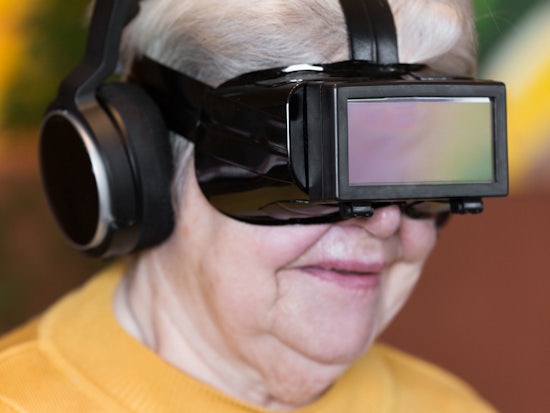
Technology continues to be a huge focus in aged care (Source: Shutterstock)
Aged care peak body Aged and Community Services Australia (ACSA) wrapped up their three day summit last week in Sydney which delved into ‘learning and research of pioneers in the industry’, identifying the latest in aged care initiatives and how to adapt and deliver these practices sustainably.
Leading Age Services Australia (LASA) National Congress is coming up in October, with topics including built and virtual environments and shining light on new ways of thinking for aged care services in the future.
Information and Technology in Aged Care (ITAC), which runs from 21-22 November, will also have a huge focus on innovation and an emphasis on assistive technology and ‘co-designing our digital future’ through managing and designing services that suit consumer needs.
LASA Chief Executive Officer Sean Rooney says the aged care industry is in a state of transformation with a high demand to find “smart, more efficient, new or better ways to deliver superior care”.
“Demand for services is being driven by the burden of disease, ageing population and rising consumer expectations,” he says.
“All of this brings to our industry an innovation imperative to responding increasing demand, changing expectations, productivity pressures, new models of care, technological advances and business model disruption.”
The innovations and initiatives discussed and introduced during conference season, along with technologies in trial stages and on the market, are aiming to personalise experience, deliver deeper patient insights and empower older Australians.
Among the most recent innovations, which received a $1.7 million Cooperative Research Centre Projects grant from the Federal Government, is a new technology involving a sensor, which provides real-time monitoring on a patient’s health and movements, particularly at night, allowing aged care and medical staff to be alerted on potential concerns.
Sleeptite, developed by researchers at Melbourne’s RMIT University, is a silicone fabric covered with sensors which can monitor a patient’s heart rate and breathing, making it a vital tool for those with serious health conditions. The Sleeptite team are planning on integrating the sensor into bedding products so carers can monitor sleep habits and movements.
Insights have proven the technology minimises disruption to patients, allows quicker response time for medical and aged care staff and more personalised treatment. Researchers on the Sleeptite project hope to have the product ready for market within the next three years.
Also showing positive outcomes for older Australians are two significant technology projects which have already hit the market.
PainChek, previously known as ePAT, is being rolled out nationally via Dementia Support Australia (DSA) after four years of trials, and is a facial recognition software that can detect pain in the elderly and people living with dementia.
Following promising pilot trials in Western Australia and South Australia, the tool runs analysis of a 10-second video of a person’s face to detect expressions correlated with pain, allowing carers to identify and take appropriate course of action. It has shown significant improvement with data handling and simplification of reporting.
The tool, which was represented last week at the ACSA summit, was developed by researchers from Curtin University’s School of Pharmacy and Biomedical Sciences in Western Australia and is being rolled out nationally to 150 consultants caring for up to 5000 people each year.
Another immersive technology, by US scientist Professor Frank Werblin, is called IrisVision, which involves a Samsung smartphone and a virtual reality (VR) headset to help people with vision impairment see more clearly.
Professor Werblin says the technology is life-changing for those with low vision or eye diseases such as macular degeneration.
“It means people with low vision can do things many others take for granted, such as seeing loved ones’ faces, watching TV, reading books or enjoying art.”
He says people with vision impairment often feel socially isolated, and technology like this “brings back life to people with low vision”.
VR is also the main focus of two other projects currently in trial stages, one of which includes a cognitive training device for people with Parkinson’s Disease to delay the onset of dementia, while the other targets positive psychology to foster integration for both aged care and dementia patients.
Mr Rooney says the focus on new technologies is to produce outcomes such as independence and re-ablement, workforce efficiency, quality of life and ageing well.
Community health provider Silver Chain also began trials for a technology that uses “holographic doctors” to visit patients in their homes, creating a virtual clinic where healthcare professionals can have access to data and doctors. The technology was launched by Minister for Senior Australians and Aged Care Ken Wyatt in July.
While there seems to be a wide variety of new technologies hitting the aged care market this year, Minister Wyatt stresses human interaction is still vital in the aged care sector.
“As important as technology is, it will never replace the importance of the human touch of caring. But what it can do is improve and augment the care we are providing.”
From cutting-edge sensors, to virtual reality and smartphone apps, these initiatives show us technology has come a long way in the aged care sector and is showing huge potential to improve the quality of care delivered to older Australians.