The connection between sense of smell and dementia
Losing your sense of smell could be more than just a sign of growing old according to new research released by a Canadian University.
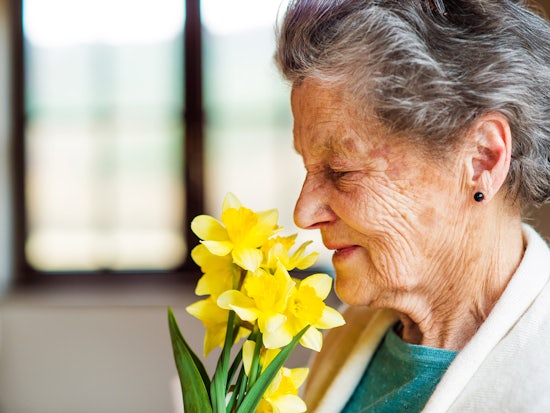
Diminished odour identification may be a practical and affordable biomarker in Alzheimer’s pathology (Source: Shutterstock)
The study, conducted by McGill University, found that those who had the most difficulty in identifying odours were those in whom other, purely biological, indicators of Alzheimer’s were most evident.
The published findings suggest that among healthy high-risk older individuals, ‘odour identification reflects a degree of preclinical pathology’ and that ‘diminished odour identification may be a practical and affordable biomarker in Alzheimer’s pathology’.
While sharing enthusiasm for the research being done, Chief Executive Officer (CEO) of Alzheimer’s Australia, Maree McCabe says that it is just one facet of research into the ability to more efficiently and effectively diagnose dementia.
“Alzheimer’s Australia welcomes research into the possible causes and effects of dementia – it is critical that we better understand the disease, its effects and possible causes so that we can also tailor effective interventions,” Ms McCabe says.
“The symptoms of dementia are not just related to memory loss and, depending on the type of dementia, it can affect each person differently.
“There is growing evidence that, because of the neurological damage caused to the brain, a person’s perception of the environment and stimuli around them may be impacted. This could include sense of smell.
“While research into the possible connection between smell and dementia may be fruitful, it is important to note that problems identifying smells could be indicative of many other medical conditions.
“As such it is important that dementia research continues to encompass multiple foci.”
As well as making a connection between loss of olfactory sense and dementia, the McGill study also found that the pathological changes to the brain can occur 20-30 years before symptoms manifest – something Ms McCabe says has also been shared as part of a recent Australian Imaging, Biomarker and Lifestyle (AIBL) study of Ageing.
“Sometimes people fail to recognise that these symptoms could indicate that something is wrong,” Ms McCabe says.
“They may mistakenly assume that such behaviour is a normal part of the ageing process, or symptoms may develop gradually and go unnoticed for a long period of time.
“We are still a long way off having a single, simple test to detect dementia in its early stages.
“Timely diagnosis is critical and is something Alzheimer’s Australia has long been advocating for.
“Access to early intervention and treatment, support and services can make an extraordinary difference to a person living with dementia, as well as their carers and family members.
“With support, people living with dementia can continue to do many of the things they did before they received a diagnosis.”
With more than 413,000 people currently living with dementia in Australia at a cost of $14.67 billion, Ms McCabe says that without sustained research into the disease and a medical breakthrough in prevention, treatment and diagnosis of dementia, it is estimated that by 2056 there will be 1.1 million people living with dementia at an increased cost to the economy of $36.85 billion.
“The care and support of people with dementia is one of the largest health care challenges of our time,” she says.
“There are currently a small number of medications that may positively impact the symptoms of dementia; as well as cognitive testing, brain scans and investigation of some genetic markers which may indicate the presence of dementia.
“Whilst there is no cure, Alzheimer’s Australia works to provide advocacy, education, research and services to ensure people with dementia are able to live the best quality of life possible.
“This is why there is an urgent need to focus on increasing and sustaining funding for dementia research internationally and to ensure that we are supporting people with Alzheimer’s disease and other dementias, their families and carers.
“With even just a 5 percent reduction in the prevalence of dementia, there could be 260,000 fewer people living with dementia in 2056.
“Such an intervention could result in savings of $26.8 billion in the costs of dementia over the next 20 years and a massive $120.4 billion by 2056 – research is an important element of the work to find ways to slow or halt the progression of dementia.”
For those impacted by dementia, the National Dementia Helpline 1800 100 500 offers advice and support 24 hours a day.










![The new Aged Care Act exposure draft is slated for release in December of 2023, but advocates hope to see it rolled out on January 1, 2024. [Source: Shutterstock]](https://agedcareguide-assets.imgix.net/news/articles/wp/agedcareact__0811.jpg?fm=pjpg&w=520&format=auto&q=65)









Comments