Older Australians adapt well to telehealth services during COVID-19
Research released by the Global Centre for Modern Ageing (GCMA) has found that older Australians embraced the move to telehealth services because of COVID-19, and are happy to continue using the service post-coronavirus.
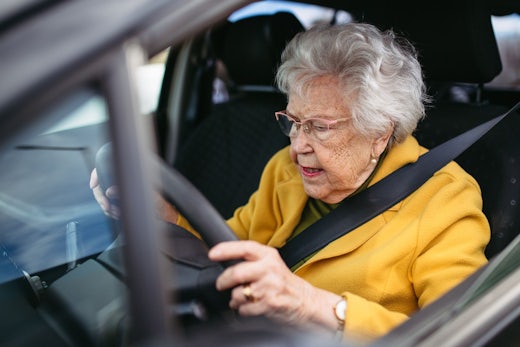
![<p>Over 60 percent of surveyed older Australians, over the age of 60, say that telehealth services have worked well and they are willing to use the services in the future. [Source: iStock]</p>](https://agedcareguide-assets.imgix.net/news/articles/news/articles/iStock-1157058398.jpg?fm=pjpg&format=auto&w=550&q=65)
Over 60 percent of surveyed older Australians, over the age of 60, say that telehealth services have worked well and they are willing to use the services in the future. [Source: iStock]
Over 60 percent of surveyed older Australians, over the age of 60, say that telehealth services, either on the phone or online, have worked well and they are willing to use the services in the future.
The research report, Telehealth – Here to stay?, is part of an ongoing study by the GCMA to understand how older Australians are coping during the pandemic.
Results from GCMA show that in most cases, older Australians experienced similar or better treatment than through face-to-face consultation.
Around 88 percent of older Australians said the value for money was the same or better than normal, and 85 percent said the quality of care and treatment provided was the same or better than normal.
Chief Executive of GCMA, Julianne Parkinson, says, “Older Australians like telehealth for its convenience, reduced travel and ability to be conducted at home.
“What is very apparent is that offering consultations via telephone as well as online is important to Australians aged over 60.
“Older Australians were more likely than younger Australians to have taken part in a telephone telehealth appointment during the pandemic.
“We found 44 percent of people aged over 60 took part in a telephone telehealth appointment or consultation, versus 33 percent of adults aged under 60.”
Over two in three survey respondents over 60, 67 percent, used telehealth during the pandemic and feel confident using the service in the future.
Additionally, 49 percent of Australians aged over 60 who used telehealth during the pandemic said they were likely to use telehealth after the pandemic.
More than 1,200 people involved in the survey, privacy concerns were not a major issue for older people using telehealth.
Over 95 percent of older Australians aged over 60 said telehealth privacy was the same as normal or better than normal compared to face-to-face appointments.
One in five older Australians, 20 percent, surveyed by the GCMA had taken part in an online appointment or consultation with a health professional during COVID-19.
“The experience of those who took part in digital consultations was positive. We learnt that 90 percent of Australians aged over 60 who took part in an online telehealth consultation found booking the appointment the same or better than a normal consultation,” says Ms Parkinson.
“And 85 percent of older Australians who took part in an online telehealth consultation found it easy or very easy to log in or set up their online appointment.”
While there was a largely positive experience around telehealth, 38 percent of Australians aged over 60 did have difficulties using the service.
Those challenges included the inability to have a problem examined or receive usual treatment; a less personal experience due to lacking body language and cues; less perceived warmth and less perceived care; difficulties for people with hearing impairment; awkwardness, especially if with a new clinician; and technical glitches, a lack of appropriate technology or technology confidence.
Ms Parkinson says the disruption from the pandemic has presented a unique opportunity for telehealth.
“The positive sentiment for telehealth has created a window for the broader industry to secure the uptake of telehealth into the future by designing and delivering services to meet older people’s needs,” says Ms Parkinson.
“Now is the time for the industry to act, as people regain broader choices for health consultations, the telehealth experience will need to be compelling for health professionals and patients to support its ongoing adoption.
“This will need careful thought, planning and design of appropriate services and processes.”
The GCMA hopes this study will inform the aged care and health industry and the Government about older people’s experiences of telehealth.
Ms Parkinson adds, “We can see what has worked well with telehealth and have also uncovered some of the challenges [such as lacking body language cues and less perceived warmth].”
This survey was undertaken from 19 – 31 May. To download the report, head to the GCMA website.







![The new Aged Care Act exposure draft is slated for release in December of 2023, but advocates hope to see it rolled out on January 1, 2024. [Source: Shutterstock]](https://agedcareguide-assets.imgix.net/news/articles/wp/agedcareact__0811.jpg?fm=pjpg&w=520&format=auto&q=65)







Comments