New study seeks seniors on the Sunshine Coast
Sunshine Coast seniors are soon to be in high demand as a new study hopes to engage with 50 locals as part of a trial of a new mobile phone app designed to assess the risk of people becoming frail and provide interventions to reduce the risk.

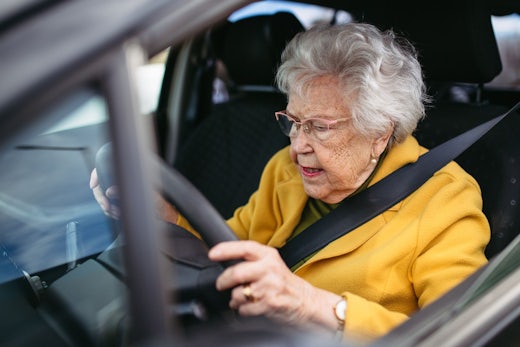
Around 50 Sunshine Coast locals are needed to trial a new mobile phone app (Source: Shutterstock)
The trial run by University of the Sunshine Coast (USC) of the My active and Healthy Aging (my-AHA) app will require participants to be involved for 18-months, with six-month reviews as part of the greater and more extensive international study.
Associate Professor Mathew Summers, lead researcher at USC’s Sunshine Coast Mind and Neuroscience – Thompson Institute, says the study will assess the app’s effectiveness in assessing a person’s risk for becoming frail and providing in-home interventions tailored to the individual’s needs.
“When people become physically frail, they are at greater risk of falling and sustaining serious injuries,” he explains.
“In addition, physical frailty can lead to a loss of independence meaning that the frail older adult may require moving into residential care.
“By identifying people at greater risk of becoming frail, the goal of the my-AHA platform is to provide tailored interventions to enable the older adult to reverse the risk of frailty and remain living independently in their own home.”
As well as being 60 years or older and living on the sunshine Coast, participants also need to be comfortable using a smartphone, have their own internet access, be able to stand and walk unassisted, have no history of significant cognitive impairment, have no existing psychological or psychiatric diagnosis and be healthy with no unstable medical conditions.
The study also requires participants to have also experienced one or more of the following symptoms in the past year:
- Significant weight loss without dieting
- Feeling more exhausted
- A slowing of movement or decline in physical strength
- Reduced activity level
Over the 18-months, participants will be assessed by researchers from the Thompson Institute every six months to monitor their progress over time.
Associate Professor Summers says if successful, the app will be hugely beneficial to senior Australians in particular.
“The aged care situation in Australia is very different to that in Europe,” he says.
“Here, the population is quite spread out so having services in central locations is very difficult and often forces providers of community care to give the needed support by having carers travel quite long distances.
“Using technology like this allows care providers to make more efficient systems and ones that can be accessed by those in regional areas, offering a solution to help keep older people in their own homes for as long as possible.”
He adds that the study, now in its third year, is a very exciting project for researchers and the sunshine Coast to be a part of.
“The first two years were all about developing the app, now we are here ready to test it out to see if it does what we think it does,” he says.
“The Sunshine Coast is the only area in australia involved in this international project which puts us at the cutting edge of this new technology.
“It’s a hugely exciting study and opportunity for seniors here on the Sunshine Coast.”
The global study, funded by the National Health and Medical Research Council and the European Union’s Horizon2020 program, involves researchers from Italy, Austria, Spain, Germany, United Kingdom, the Netherlands, sweden, Japan and Korea.
Associate Professor Summers says the research team should have the study results by the end of 2019, with the aim for commercial works and release of the app to be from 2020 onwards.






![The new Aged Care Act exposure draft is slated for release in December of 2023, but advocates hope to see it rolled out on January 1, 2024. [Source: Shutterstock]](https://agedcareguide-assets.imgix.net/news/articles/wp/agedcareact__0811.jpg?fm=pjpg&w=520&format=auto&q=65)








Comments