Make ‘a hell of a racket’
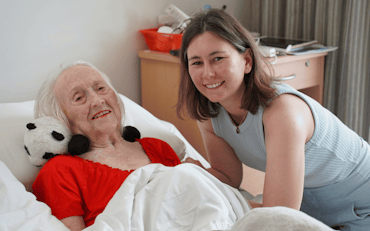
She was a carer to her mother who was diagnosed with Alzheimer’s disease in 2001 and has since been an advocate for more funding into dementia research. She is now calling on the rest of Australia to “make a hell of a racket” for a greater commitment to federal funding for Alzheimer’s.

She was a carer to her mother who was diagnosed with Alzheimer’s disease in 2001 and has since been an advocate for more funding into dementia research. She is now calling on the rest of Australia to “make a hell of a racket” for a greater commitment to federal funding for Alzheimer’s.
Daughter of former Prime Minister, Bob Hawke and Alzheimer’s sufferer, Hazel Hawke, Sue Pieters-Hawke spoke to DPS eNews about her fight to bring Alzheimer’s to the forefront.
DPS eNews spoke to the former carer in time to mark Dementia Awareness Week which began yesterday (Sunday, 18 September 2011).
“This government needs to acknowledge aged care reform. In regard to the Productivity Commission report, it states reform [of the sector] is a priority,” Ms Pieters-Hawke says.
“We would say this report fails to sufficiently acknowledge, to a degree, which diseases are front and centre in residential and community care,” she adds.
Ms Pieters-Hawke claims Alzheimer’s is “under-reported”, and to ensure Australia provides the “best possible standards and quality dementia care comes down to primary care management support and the availability of specialists”.
“Most hospitals don’t have good procedures and practices. They’re not doing what they should be doing. A lot needs to happen if we want to reduce further incidences or avoid or delay the onset of dementia,” she says.
While Ms Pieters-Hawke admits being a carer is a “very tough gig”, she says “people with dementia are still people”.
“They can still experience their life, and there needs to be more development in person-centred care to enlighten the quality of care for people with dementia,” she claims.
“They have been let down, and not supported and involved in life because there is too much stigma and isolation… so much of what we see as symptoms of dementia are symptoms of neglect and poor attitudes on our part,” she says.
A shift in community attitudes, both inside and outside of the care system” is needed, according to Ms Pieters-Hawke.
“We need to create opportunities and dramatically improve quality of life for people with dementia… and we need to coach the federal minister for mental health and ageing and his federal ministers advisory group.
“[Dementia] is an issue which needs the support of people throughout the sector,” she says.
Ms Pieters-Hawke encourages people to air their concerns about dementia, funding and research into the cognitive disease.
“Let your local politician know your thoughts and tell your story,” she encourages.
On 3 November 2003, the ABC aired an episode of Australian Story where Hazel Hawke publicly revealed that she was suffering from Alzheimer’s disease. She was reportedly reluctant to go public about the illness which she called the ‘Big A’. Sue Pieters-Hawke will launch a biography of her mum, who is now in high-level nursing care, at the end of the year.