Impact increased by ‘sandwich caring’ and generational spread
Caring roles are often varied and unique but a number of modern day trends are starting to form and are now in the spotlight following on from National Carers Week 2017 (15-21 October) and the 7th International Carers Conference (4-6 October).
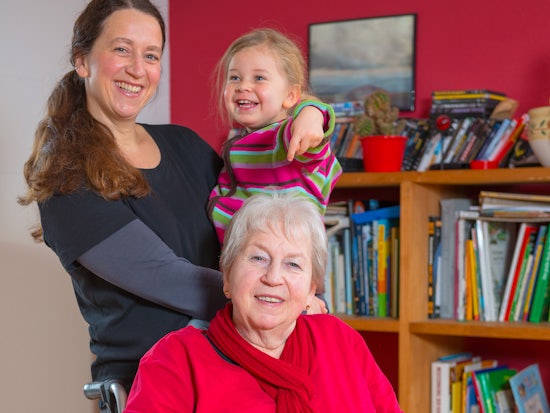
Sandwich carers caring for two generations have to manage two different systems and supports (Source: Shutterstock)
The prevalence and impact of what is being labelled as ‘sandwich caring’ – caring for two different generations at once – and ‘generational spread’ – where carers are separated from those they care for – are the trending issues at the heart of conversation.
Carers South Australia (SA) Chief Executive Officer David Militz says the organisation is increasingly hearing about carers and those they care for being impacted by sandwich caring and generational spread.
“Often we are finding more and more people are caring for two different generations, as what we call sandwich carers,” Mr Militz says.
“This means that there are carers, for example, caring for an elderly parent and a child with disability all at once.
“We often see sandwich carers being the middle aged families with young children and elderly parents and when we speak to carers that are in the middle of the sandwich, life is very complicated.
“These carers are caring for people in two completely different age groups and that becomes doubly stressful.
“There are a lot of different government systems and support systems for both these people.
“This complicates the caring role a huge amount.”
When it comes to generational spread, Mr Militz says it can come from either those needing care moving away from the family, or the family carers living away from those needing care.
“Generational spread, again, makes caring even harder,” he says.
“It is a trend that certainly seems to be increasing; there are a lot more people caring for someone at a distance.
“Caring can often be a sudden role and people may be off living their lives living overseas, interstate or even in the city or country away from those that now need care, or parents may have moved away from their children and suddenly find themselves needing support.
“We see it often and the further remote or rural you go, the bigger risk of isolation there can be.”
Mr Militz adds that the health and wellbeing of these carers is significantly impacted.
“We already know that carers have lowered health and wellbeing, but for those impacted by sandwich caring in particular, this just multiplies the levels of stress and further negatively impacts the wellbeing of the carer.
“On top of this there is the financial impact that we are seeing in the results of our recent survey of 1,700 carers in South Australia.
“This shows that 45 percent of these carers are on a household income of less than $40,000 with 30 percent of respondents saying they are more financially worse off than last year, which comes as no surprise with the increases to cost of living.”
When it comes to working through generational spread, Mr Militz says the carers conference in Adelaide earlier this month highlighted a number of technological advances that would be of benefit to those caring, or being cared for, from a distance.
“Technology is another thing that is looking to change the way of generational spread,” he explains.
“At the carers conference, some of the technology that is out there was discussed and it is mind-blowing.
“The way it aims to enable people to be independent in a way they haven’t been able to be before.”
For both sandwich carers and those affected by generational spread when caring or being cared for, the advice is to make the most of available services and also establish some support within the family where possible.
“This was all discussed at the conference – the importance of good communication within a family and sharing the caring role,” Mr Militz says.
“It is the ideal scenario, but not always possible.
“It’s good to set up clear ideas of who is doing what early on to ensure that expectations and stresses are understood.
“When it comes to sandwich caring, if there is the other parent available to help care for the child while the older person is being cared for, this can provide much needed relief and support leading to better balance for the carer.
“One of the key things is for carers to find out what services are available in their regions.
“It is vital they find out what is out there – they may never use it but it is important that they understand what is there is it is ever needed.”
Access to state-specific carer support information is available by calling Carers Australia on 1800 242 636 or online.











![The new Aged Care Act exposure draft is slated for release in December of 2023, but advocates hope to see it rolled out on January 1, 2024. [Source: Shutterstock]](https://agedcareguide-assets.imgix.net/news/articles/wp/agedcareact__0811.jpg?fm=pjpg&w=520&format=auto&q=65)










Comments