Home healthcare delivery offers benefits to all
A model program developed at Indiana University in the United States to provide care to low-income older adults in their homes has earned recognition for its effective approach and cost-saving benefits.
A paper published in an issue of the Journal of the American Medical Association praises a team approach developed by researchers from Indiana University and the Regenstrief Institute as one of three models with the greatest potential to improve the effectiveness and efficiency of the complex primary health care of older adults.
In a large clinical study, Geriatric Resources for Assessment and Care of Elders (GRACE) improved health and quality of life, decreased emergency department visits and lowered hospital admission rates were shown in a group at high risk for hospital admission.
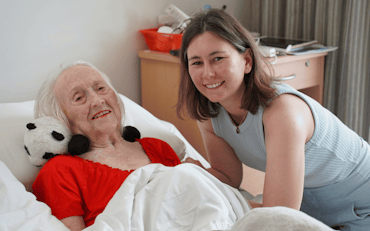
The key to GRACE is two teams. The support team, consisting of a nurse practitioner and a social worker, meets with each patient at his or her home to conduct an initial comprehensive geriatric assessment from the medicine cabinet to the kitchen cabinet.
Based on the support team’s findings, a larger interdisciplinary team (including a geriatrician, pharmacist, physical therapist, mental health social worker and community-based services liaison) develops an individualized care plan.
Then the ball is back in the support team’s court. The nurse practitioner and the social worker meet with the patient’s primary care doctor to come up with a health-care plan consistent with the patient’s goals, such as maintaining the ability to participate in social and religious activities.
The support team then works with the patient to implement the plan that contains strategies for medical issues of concern as well as elements related to maintaining quality of life. With the assistance of an electronic medical record and tracking system, the GRACE support team provides ongoing comprehensive care management.
GRACE is cost effective. By its second year, GRACE saved money for the sickest (those with three to four chronic diseases), and in the third year, a year after the home-based intervention ended, it saved even more.
Remote monitoring technology helps seniors and care costs
Employing remote monitoring technology to enable the elderly to move from nursing homes and into community-based settings such as supportive housing can keep seniors safe at a substantially reduced cost, according to a new study undertken in Philadelphia.
Commissioned by Courtland HT in collaboration with its technology partner Healthsense and the NewCourtland LIFE Program, a Philadelphia-based PACE provider, the study found that safely moving 33 elderly residents from nursing homes and into NewCourtland Square, a supportive housing complex, resulted in savings of $1.85 million annually.
The units at NewCourtland Square are outfitted with sensor technology to exclusively serve seniors 60 and older who are transitioning out of nursing homes.
The sensor technology provided by Courtland HT and powered by Healthsense was used to monitor the health and well-being of the participating NewCourtland Square residents for nearly two years.
The combined cost of technology and staff support for the 33 residents was $288,600 for one year in supportive housing, compared to the $2.14 million total annual cost of nursing home care. The annual cost of the sensor technology alone was $39,000.
“It is clear from NewCourtland’s success with technology that PACE clients can live more independently and less expensively than in nursing homes,” the report states.
“PACE programs that use technology to monitor clients are more likely to reduce the incidence of hospitalization, and use of technology as part of PACE programs can reduce the FTE caregiver staffing requirements.
“The results in this study affirm that Healthsense’s technology allows seniors to continue living safer and more independently in less expensive, less resource-intensive housing with a high quality of life,” said Brian Bischoff, president and chief executive officer of Healthsense.
“The cost of our technology is a minimal investment when compared to the expense of nursing home care – $125 per month per person versus $6,000 per month per person. At a time when state and federal healthcare budgets are under severe pressure, technology-supported independent living is a viable and much less-expensive alternative to nursing home care.”
Other benefits of the technology provided by Courtland HT and powered by Healthsense that were highlighted in the report include reductions in expensive emergency room visits and hospitalizations for residents as a result of the system’s ability to promptly detect changes in health and behavior patterns that could indicate a clinical problem.
“NewCourtland’s experience over the past two years has demonstrated that PACE participants can live safely in the community with fewer hospitalizations and longer deferral of or avoidance of nursing home placement,” the report concludes.