Hearing health inquiry report raises issues
A number of issues have been raised and recommendations put forward in a recently released hearing health inquiry report.
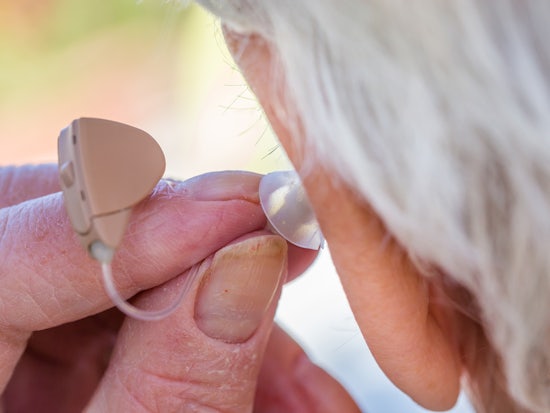
Hearing Health Report raises issues for older Australians (Source: Shutterstock)
The report focused on hearing issues for all Australians but a number of the issues raised relate to older Australians in particular, and have been flagged as topics for addressing by National Seniors Australia.
National Seniors Chief Advocate Ian Henschke has welcomed the report and the corresponding recommendations, calling on the Federal Government to “adopt key recommendations without delay”.
Some of those key recommendations include to crackdown on use of commissions in the hearing aid industry and that hearing becomes a national health priority with a national strategy; greater education and an awareness campaign encouraging people experiencing hearing loss to seek help; and a review of hearing services provided to residents in aged care facilities.
“We’ve been told some customer horror stories,” Mr Henschke says. “One member knew someone who re-mortgaged his house to buy $11,000 in hearing aids that were unsatisfactory and unrefundable.
“We’ve been told of people questioning a price and having it suddenly drop by thousands.
“At the same time we also heard of people buying products that do the job at a fraction of the price.
“We are very disappointed with the lack of competition and price transparency in the market.”
The Australian Competition and Consumer Commission (ACCC), who conducted an investigation into the use of commissions and other sales incentives, found that they are ‘commonly used to motivate clinicians to sell hearing aids, particularly in clinics run by major operators’.
In the report the ACCC are said to be ‘critical of the use of commissions in a ‘healthcare setting’ where consumers would expect clinicians to provide independent and impartial advice and have as their primary consideration the wellbeing and best interest of the consumers they are consulting’.
The ACCC expressed concern that these sales practices could jeopardise the impartiality of clinicians.
“…Commissions, incentive and other mechanisms designed to drive sales can create a conflict with clinical independence, professional integrity and the primary obligation to consumers,” the ACCC states in the report.
“This conflict is particularly troubling in the sale of hearing aids, given that consumers who require hearing devices are often disadvantaged or vulnerable due to their hearing loss, age, other medical conditions, disability, income, or a combination of these things.”
The ACCC comments that the information it received was often anecdotal and it was therefore “difficult to find instances that we were able to pursue from an enforcement perspective”.
Mr Henschke says National Seniors agrees with the inquiry report that in many ways Australia is a leader in supporting those with a hearing loss. But also agreed that much more could be done, especially for older people who were often on extremely limited incomes and more vulnerable to scams and rip-offs.
“Our members have told us they often feel pressured into purchasing expensive hearing aids without any understanding of the cost benefit of the product being sold,” Mr Henschke explains.
“Many are being exploited by the unconscionable actions of retailers and sales people driven by commissions, rather than public health considerations.”
In the report, National Seniors supported the unbundling of clinical services from the sale of devices stating that “ideally, hearing assessments should occur separately from sales so that an individual can receive a hearing assessment and then take the audiogram result and shop around to find the best product and service”.
Mr Henschke adds that National Seniors agreed with the inquiry report that the time for action was well overdue.
“We know there is a lot of frustration among those with hearing loss and in the medical and support community,” Mr Henschke says.
“It’s time the government go on with fixing the situation.”











![The new Aged Care Act exposure draft is slated for release in December of 2023, but advocates hope to see it rolled out on January 1, 2024. [Source: Shutterstock]](https://agedcareguide-assets.imgix.net/news/articles/wp/agedcareact__0811.jpg?fm=pjpg&w=520&format=auto&q=65)










Comments