Fast way to slow dementia
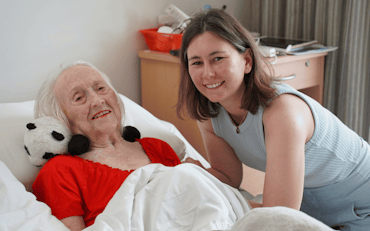
Sharon Savage, who has proven that it is reportedly possible to improve the vocabulary of people with dementia in a short time frame, is the winner of University of NSW’s 3 Minute Thesis (3MT) competition.

Sharon Savage, who has proven that it is reportedly possible to improve the vocabulary of people with dementia in a short time frame, is the winner of University of NSW’s 3 Minute Thesis (3MT) competition.
With nothing more than a stopwatch, a stage and a simple slide, Ms Savage was able to clearly communicate her thesis and impress the judges in 180 seconds, winning $3,000 prize money and the opportunity to represent UNSW at the Australia & NZ final of the 3MT.
The PhD candidate from UNSW Medicine has proven that if people with dementia use an online tool – which prompts them to recall simple words such as “toaster” for just half an hour a day – they will see improvements in a matter of weeks.
Ms Savage is now using brain imaging techniques to show “how you can influence your brain by working your mind”.
The runner up in the all faculty final was Matthew Wright from Engineering, who is working to improve the efficiency of plastic solar cells, which could ultimately be made more quickly and cheaply than current silicone versions.
The People’s Choice Award of $1,000 went to Master’s student Jim Plamondon from Arts and Social Sciences who hopes that one day each of us will be able to play a musical instrument, using our mobile phones.
For her presentation investigating how the International Criminal Court can help deliver justice for rape victims, Amrita Kapur from UNSW Law was awarded the $500 ASPIRE prize. The award was voted on by high school students taking part in the ASPIRE program.
Twenty one students took part in the event, which is hosted annually by the UNSW Graduate Research School.
“The competition is an excellent opportunity for PhD students to demonstrate their ability to consolidate their research findings,” says Professor Laura Poole-Warren, Dean of Graduate Research at UNSW.
“Each of the students did an amazing job summarising their findings and making their research accessible. I congratulate all of them,” she says.