Dementia carers suffer too
Many Australian spouses are looking after loved ones with dementia without external support, research from South Australia’s Flinders University shows.

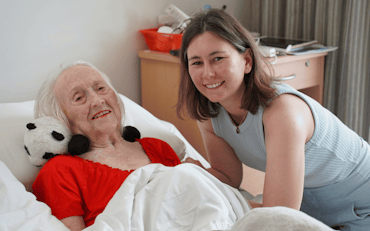
South Australian Flinders University researcher, Dr Lynsey Brown, says many Australian spouses are looking after loved ones with dementia without external support.
In a study of more than 100 Adelaide carers over seven years, Flinders Research Associate, Dr Lynsey Brown, found many spouses caring for their partners in the family home were failing to access support services, leading them to develop serious physical and mental health problems.
“There are some really great services available to dementia carers but we found that they weren’t accessing this support,” says Dr Brown, who presented her research at the 47th Australian Association of Gerontology National Conference in Adelaide last week.
“It could have been that they didn’t know what’s out there, or that they were having trouble accessing the support,” Dr Brown says.
“In a lot of cases the spouses didn’t see themselves specifically as a caregiver; they just felt it was part of their marital duty to look after each other so they didn’t even consider seeking external help as a carer,” she adds.
It is estimated one in 15 Australians over the age of 65 years experience dementia, and are commonly supported by spouses, with the figure set to rise as the population ages.
Dr Brown says many of the spouses in the study suffered long term stress which increased as the dementia progressed, as well as long term physical deterioration attributed to both the spouses’ age and burdens of being a full time carer.
“Some of the caregivers adapted to the role quite well but for those who did experience high levels of stress, their mental health was very much dictated by their individual perceptions and sense of control of the situation, their social networks, their age and their own general health condition.”
As part of the study, stress and wellbeing were also measured up to two years after the care recipient had moved into residential care or died.
The findings showed evidence of physical “wear and tear” but psychological recovery over time, with little difference based on the reason for transition.
“The act of transition is a challenging time for carers but we saw indications of improvement once caregivers were no longer in the role,” Dr Brown says.
“While there was a trend for carers to improve, for some the stress of caregiving may be too damaging for recovery to occur, even after a long period of time.”
Dr Brown claims the research highlights the need for greater awareness of services, as well as person centred support before, during and after transition: “Many carers get a real sense of satisfaction from their role so we need to ensure that support plans consider each individual case, including extended support in the years after transition to residential care or the death of the spouse.
“It’s also important to realise that support isn’t just about the services; family and friends need to think about the long term impacts of the spouses’ role too.”