Calls for further dialogue on domestic violence and older people
Recognising the need for more dialogue and research into domestic violence and older people, the South Eastern Sydney Local Health District brought a wide range of professionals and experts together at its recent Domestic Violence and Older People Forum.
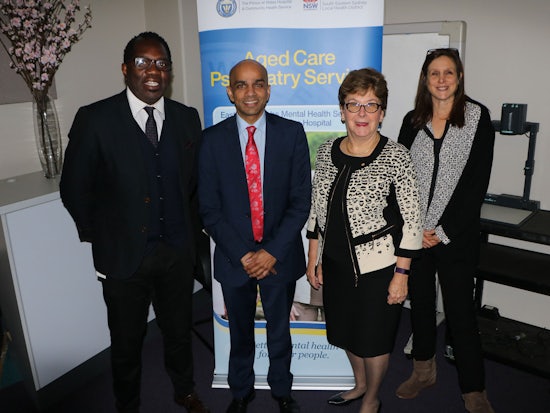
Key speakers and organisers of the forum (L – R): Manager Mike Gatsi, Associate Professor Chanaka Wijeratne, The Hon Dr Kay Patterson AO, and Senior Social Worker Daniella Kanareck
Associate Psychiatrist Professor Chanaka Wijeratne, South Eastern Sydney Local Health District, who headed up the forum, says over the past two to three years, more people have been presenting themselves to services where intimate partner violence as involved.
“We need to get away from the stereotype of frail old people and take it seriously,” he says, and feels not only are older people ignored in domestic violence, but there are no discussions about the issue.
He points out there is a lot of domestic violence publishing on indigenous, culturally and linguistically diverse backgrounds or in rural areas, but very few talk about older people.
An Australian Longitude Study on Women’s Health found 5 per cent of older women aged 70-75 answered yes to the question of ‘had you every been in violent relationship with a partner/spouse and in a Personal Safety Survey (ABS 2012), 0.7 per cent of women over the age of 60 said they’d been physically or sexually abused by a partner. The 2013 Crime and Misconduct Commission’s Vulnerable victims: homicide of older people research found 14 per cent of homicides involving victims age 70 years or over were committed by an intimate partner.
Prof Wijeratne says while domestic violence in an older couple is elder abuse, a lot of cases are considered elder abuse when they actually are not. “In elder abuse, typically the older person is frail and vulnerable and is been abused by a child,” he explains.
In the case of domestic violence, the perpetrator is a partner. “They are older and they are not frail,” he adds. “People come from a cohort where it was accepted you stayed in a relationship for better or worse.”
Prof Wijeratne highlights some age specific issues an older victim must contend with include physical illness, frailty, limited finances, dementia and social isolation.
“With the dementia there is an increased risk of been a victim,” he says. “You may have been a [domestic violence] victim for years and with dementia it [the violence] may get worse. And then the victim is expected to care for the perpetrator; it’s a highly complex issue.”
At the forum 160 attendees from a diverse range of backgrounds heard from experts in mental health, domestic violence, elder abuse, the police and research.
“We’ve had a lot of response, from police, lawyers and domestic violence services, and our plan is now to write a paper and look at management guidelines for domestic violence in older people,” says Prof Wijeratne.
The group’s aim is to broaden the perspective of how to manage and look after patients, increase awareness and look at the legislation around the issue.











![The new Aged Care Act exposure draft is slated for release in December of 2023, but advocates hope to see it rolled out on January 1, 2024. [Source: Shutterstock]](https://agedcareguide-assets.imgix.net/news/articles/wp/agedcareact__0811.jpg?fm=pjpg&w=520&format=auto&q=65)







Comments