$250,000 Dementia Care project launched in Tasmania
A new $250,000 dementia research and demonstration project that aims to improve dementia care for sufferers living in aged care facilities was launched in Tasmania last week.
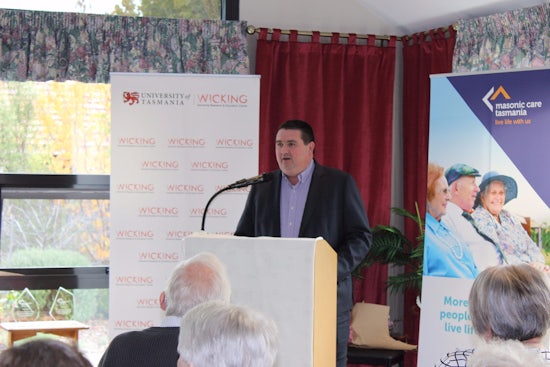
Chief Executive Officer of Masonic Care Tasmania Daniel Findley launches the Dementia Care Project at Freemason Homes in Lindisfarne last week (Source: Masonic Care Tasmania)
The Improving Dementia Care Project is collaboration between Masonic Care Tasmania, the Masonic Centenary Medical Research Foundation and the Wicking Dementia Research and Education Centre at the University of Tasmania.
The launch was hosted at Freemasons Homes in Lindisfarne, Tasmania on Tuesday.
The project is set to run over two years across three Masonic Care Tasmania aged care sites, including two units that cater specifically for dementia patients.
The project seeks to develop, implement and evaluate the role of graduates of the University of Tasmania’s Bachelor of Dementia Care (BDC) while modelling a new role within the aged care sector for a Dementia Care Support Project Worker.
Despite the fact that an estimated 50-80 percent of nursing home residents in Australia have dementia, the BDC remains Australia’s only degree specific to caring for patients with dementia.
Using a dementia care improvement project based approach, the project will be implemented across three Masonic Care Tasmania sites. BDC Graduate and Dementia Care Support Project Worker Kim Page will have the opportunity to implement the evidence-based practices gained throughout her studies to implement clinical improvements and manage behaviours.
“I see my place with this new research and demonstration project as an adviser, trouble shooter and someone who can develop strategies to assist those residents living with dementia,” Kim says.
Chief Executive Officer of Masonic Care Tasmania Daniel Findley says the most valuable aspect of the project is knowing that it is going to impact the most vulnerable people in society.
“Masonic Care Tasmania’s aged care facilities have earned a strong reputation as having respected expertise in managing challenging behaviours and dementia care,” he says.
“This new project will build on our history and further develop excellence in this area.”
Professor Andrew Robinson from the Wicking Dementia Research and Education Centre says the project is an important step for the industry in determining new ways that can ultimately assist the complexities of caring for those living with dementia in aged care facilities.











![The new Aged Care Act exposure draft is slated for release in December of 2023, but advocates hope to see it rolled out on January 1, 2024. [Source: Shutterstock]](https://agedcareguide-assets.imgix.net/news/articles/wp/agedcareact__0811.jpg?fm=pjpg&w=520&format=auto&q=65)












Comments