Choosing a retirement village in Canberra is rarely a quick decision, and it shouldn’t be. Between contract types, ingoing contributions, deferred management fees and where in the city you actually want to live, there’s a lot to weigh up.
Aged Care Guide walks you through what retirement living in Canberra looks like in practice: the village types, how ACT contracts work, what costs to expect, and how to shortlist the right village.
Retirement villages in Canberra are residential communities for people generally aged 55 and over, designed for independent living with shared facilities and optional support. Around 26 retirement living facilities in Canberra and the wider ACT are listed on the Access Canberra Register, all regulated under the ACT Retirement Villages Act 2012. Residents have at least 14 days to review a contract before signing, and a 7-business-day cooling-off period applies after signing.
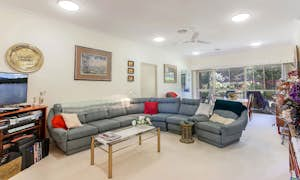
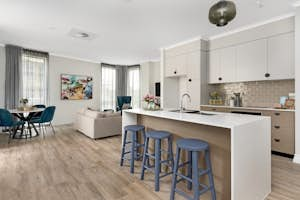
Canberra retirement homes range from small courtyard villages to large purpose-built precincts with on-site care.
Independent living in Canberra most often takes this form: a self-contained villa or apartment in a managed community, with the operator handling gardens, building maintenance and shared facilities.
Serviced apartments add meals, weekly cleaning, linen and a 24-hour call system to the standard independent living in Canberra fee structure. This suits those finding household tasks increasingly difficult but who don’t yet need clinical care.
In a land lease community, you buy the home but lease the land, paying a weekly site fee. These often fall outside the Retirement Villages Act 2012, so resident protections work differently. Check which legislation applies before signing.
Several retirement villages in Canberra co-locate retirement living with a residential aged care home, so residents can transition to higher care without leaving the community.
The ACT recognises several legal structures, but a loan licence is by far the most common in Canberra. Each structure changes what you own, what you pay, and what happens when you leave.
The operator owns the property, and you sign a long-term lease. Your right to occupy may be registered on title, depending on the lease length. Leasehold is more common in NSW and Victoria than in the ACT.
This is the standard model used by larger ACT providers like Goodwin, Southern Cross Care and Uniting. You pay an interest-free loan (the ingoing contribution) for a contractual licence to live in a specific unit. You don’t own the property, but the Act creates a statutory charge over the land for the refund owed to you on exit, protecting residents if the operator faces financial difficulties.
A small number of Canberra villages offer freehold ownership. You buy the unit on a unit or community title and become the registered owner. This offers more ownership control but comes with higher upfront costs, including stamp duty.
Stamp duty generally applies when you buy a freehold, unit title, community title or company title retirement village home. Under a loan-licence or standard leasehold, stamp duty typically isn’t payable, because no property transfer occurs. Always confirm with your solicitor.
Costs at retirement homes in Canberra fall into three main buckets.
The ingoing contribution, sometimes called the entry payment or interest-free loan, is what you pay to move in. It varies widely by village, suburb, unit size and view.
Recurrent charges cover rates, building insurance, garden and grounds maintenance, communal facilities and village staff. These are usually billed fortnightly or monthly and reviewed annually.
The DMF is the operator’s fee for the period you’ve lived in the village, typically a percentage of either your ingoing contribution or the new resident’s price, multiplied by your years of residency, often capped after 5 to 10 years. A small but growing number of villages now market “no exit fee” options, usually with a higher entry price or higher recurrent charges instead.
If your unit increases in value, the contract decides who keeps the gain. Some villages share gains 50/50, others give it all to the operator, and freehold owners keep 100% of any gain (and bear any loss). This single clause can shift the long-term cost picture significantly.
Pets, parking, visitor space and proximity to family matter as much as facilities like pools or gyms.
Only villages on the register carry the protections built into ACT law. Confirm any village before paying a holding deposit.
Visit at different times of day, talk to current residents, and ask for the disclosure statement. Operators must provide this within 14 days of a request.
You have at least 14 days to review the contract before signing, and a 7 business days cooling-off period to change your mind without penalty. A solicitor experienced in retirement village contracts will spot fee structures, exit terms and capital gain clauses you’d otherwise miss.
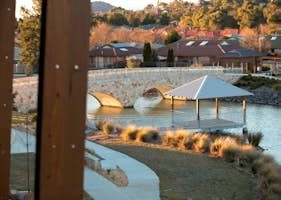
Known for lake views and bushland walks. IRT Kangara Waters sits on Lake Ginninderra; Bullecourt Village in Kaleen is close to Kaleen Plaza.
Lyneham, Braddon, Campbell, Downer, Yarralumla and Red Hill keep you close to Civic, light rail and the inner-city café scene. Goodwin’s Downer and Ainslie villages, El Alamein in Lyneham, and BaptistCare’s Yarra Rossa in Red Hill all sit in this band.
A quieter, leafy lifestyle close to Westfield Woden and the Brindabella foothills. Goodwin Farrer, Bellerive in Lyons and LDK’s Amberfield in Weston Creek are well-established options.
The southern and northern growth corridors offer newer builds at often more competitive pricing. LDK’s Greenway Views in Tuggeranong sits near Lake Tuggeranong with views to the Brindabellas.
Retirement living in Canberra is designed for independent older adults. When needs grow, the next step is usually introducing aged care supoort. The Australian Government’s Support at Home program funds personal care, nursing, allied health and domestic help in your own home, including within a retirement village.
Many residents arrange in-home care in Canberra through approved providers, with specialised options like home care for dementia patients. Respite care gives carers a short break, and if needs eventually exceed home care, aged care in Canberra offers residential care with 24/7 nursing.
The Aged Care Guide brings together listings, cost information, printed state guides, and unbiased information so you can compare retirement villages across the ACT in one place.
To talk through retirement living in Canberra with someone who understands the sector, call our Care Concierge on 1300 585 592.